


BPSPrep

Free lesson

Pain Etiology And Pathways

The first lesson of BCPMP Prep Course (BCPMP), free to read.

Lesson 1.1.1 Pain Etiology And Pathways

What you’ll learn

  • DOMAIN 1: Patient Assessment and Problem Identification → Pain mechanism recognition — identify where pain signals originate, how they travel, and which pathway clues matter most for pharmacotherapy selection.
  • DOMAIN 1: Patient Assessment and Problem Identification → Symptom pattern interpretation — separate transduction, transmission, modulation, and perception when reading board-style stems.
  • DOMAIN 2: Evidence-Based Therapeutic Planning and Implementation → Mechanism-linked regimen planning — connect likely pain biology to reasonable first-pass drug classes without overcommitting to a diagnosis outside pharmacist scope.
  • DOMAIN 3: Monitoring, Follow-up, and Longitudinal Management → Targeted monitoring — choose what to monitor when a regimen acts peripherally, spinally, or centrally.
  • DOMAIN 4: Medication Safety and Practice-Based Clinical Judgment → Avoidable mismatch detection — recognize when a medication choice is tempting but mismatched to the pain pathway suggested by the patient profile.

Blueprint mapping

  • DOMAIN 1 → Pain signal generation and pathway interpretation → instructional mapping tag
  • DOMAIN 2 → Mechanism-informed analgesic selection → instructional mapping tag
  • DOMAIN 3 → Follow-up based on mechanism and care setting → instructional mapping tag
  • DOMAIN 4 → Safety review, escalation, and mismatch recognition → instructional mapping tag

Estimated time: 45–60 minutes

Prereqs: Introductory physiology of inflammation and neuronal signaling; upcoming continuity in Nociceptive Neuropathic And Nociplastic Pain and Acute And Chronic Pain States

Key outputs: You should be able to decide whether a pain stem points to peripheral inflammatory signaling, nerve injury signaling, altered central processing, or mixed pathways; choose which medication strategy is plausible versus mismatched; and state the safest monitoring focus and escalation point.

Why it matters

  • BCPMP questions often test the mechanism-treatment match, not just memorized drug names. A regimen can be generally reasonable yet wrong for the specific pathway.
  • Pain stems frequently include distracting details such as old imaging findings, mild lab abnormalities, or a history of “tolerance.” The scoring clue is often the type of signal being generated and amplified.
  • Pharmacists must recognize when analgesic failure reflects wrong mechanism targeting, poor dosing, unsafe comorbidity overlap, or a need for referral/escalation rather than simple intensification.
  • This topic sets up the next two lessons: the classifications of pain and the acute-versus-chronic framework build directly on the pathways covered here.

Key Terms & Must-Know Facts

Key terms

  • Transduction — conversion of a noxious stimulus into an electrical signal at the peripheral nociceptor.
  • Transmission — propagation of the pain signal through peripheral nerves, spinal cord, and ascending tracts.
  • Modulation — amplification or suppression of pain signaling, especially in the dorsal horn and descending pathways.
  • Perception — conscious experience of pain in higher brain centers.
  • Nociceptor — sensory receptor activated by mechanical, thermal, or chemical injury.
  • Peripheral sensitization — lowered activation threshold at the injury site due to inflammatory mediators.
  • Central sensitization — increased excitability within the CNS causing amplified pain responses.
  • A-delta fibers — thinly myelinated fibers carrying fast, sharp, localized pain.
  • C fibers — unmyelinated fibers carrying slow, dull, burning, diffuse pain.
  • Dorsal horn — spinal cord relay site where primary afferent input is processed and modulated.
  • Ascending tract — pathway carrying pain signals from the spinal cord to the brain.
  • Descending inhibition — top-down inhibitory control using serotonin, norepinephrine, and endogenous opioids.
  • Hyperalgesia — exaggerated response to a painful stimulus.
  • Allodynia — pain caused by a normally nonpainful stimulus.

Must-know facts

  • Inflammatory mediators such as prostaglandins and bradykinin primarily drive transduction and peripheral sensitization.
  • NSAIDs best fit situations where peripheral inflammatory signaling is a major driver.
  • Opioids work at multiple levels but are especially relevant to transmission and modulation.
  • SNRIs, TCAs, and some adjuvants matter when descending inhibitory pathways or abnormal neuronal firing are involved.
  • Sharp, well-localized pain suggests more A-delta involvement; burning, aching, diffuse pain suggests more C-fiber or centrally amplified processing.
  • Allodynia and hyperalgesia are strong clues for sensitization, especially central sensitization.
  • A poor response to one drug class does not always equal severe disease; it may indicate mechanism mismatch.
  • Duration alone does not define mechanism; acute pain can include nerve injury, and chronic pain can still have inflammatory components.
Memory anchor: Think T-T-M-P for the pain pathway sequence: Transduction → Transmission → Modulation → Perception. If a stem asks what to target, ask where the signal is failing: at the tissue, the nerve, the spinal gate, or the brain experience.

Core content

1.1.1.1 Foundational map of the pain pathway

A. Explanation

The first board-style decision conflict is simple but high yield: is the stem asking you to treat where the pain signal starts, where it travels, or where it gets amplified? The single rule that resolves this is to place the patient’s clue into the pathway step: tissue injury points to transduction; radiating or shooting signal suggests transmission; allodynia/hyperalgesia suggests modulation failure; distress, sleep disruption, and central amplification raise perception and higher-order processing considerations. See Fig 1.

WHY THIS IS TESTED: Many wrong answers are not “bad analgesics”; they are wrong-level analgesics. An anti-inflammatory choice is tempting in pain that sounds severe, but if the clue is sensory abnormality rather than inflammation, the mechanism mismatch matters more than intensity.

Transduction begins when damaged tissue releases prostaglandins, cytokines, bradykinin, hydrogen ions, and other mediators that lower nociceptor threshold. Transmission then carries the signal along A-delta and C fibers to the dorsal horn, then upward through ascending pathways. Modulation occurs in the spinal cord and brainstem, where the signal may be inhibited or amplified. Perception is the conscious experience shaped by cortical interpretation, mood, attention, memory, and context. Pharmacists are rarely asked to localize every anatomic tract in detail; they are asked to identify which stage best explains the symptom pattern and therefore which class is most likely to help.

Fig 1. Pain pathway decision map
Exam takeaway: Match the patient clue to the pathway level before choosing a drug class.
flowchart LR
A[Tissue injury or trigger] --> B[Transduction at nociceptor]
B --> C[Transmission via A-delta and C fibers]
C --> D[Dorsal horn processing]
D --> E[Ascending pathways to brain]
E --> F[Perception of pain]
G[Descending inhibition] --> D
H[Peripheral inflammation] --> B
I[Central sensitization] --> D
Concept flow: How to place a pain clue on the pathway
Start with symptom language
Sharp injury, burning, aching, touch pain, and diffuse pain point to different levels of signaling.

Choose the main pathway step
Inflammatory trigger → transduction; radiating neural signal → transmission; allodynia/hyperalgesia → modulation failure.

Match a drug strategy
Peripheral inflammatory pain favors anti-inflammatory options; amplified neural processing favors centrally acting or adjuvant options.

Verify safety and setting
Check organ function, interaction burden, sedation risk, and need for escalation or referral.

High-Yield Connection: This concept is tested alongside PK/PD In Pain Care and Adjuvant Analgesic Classes. Know both where the drug acts and which symptom pattern justifies that mechanism.
Pharmacist Action: NOTICE: words such as sharp, burning, electric, diffuse, allodynia, or tenderness. SAY: “The pain description suggests a different signaling pattern, so the current class may be mismatched.” MONITOR: pain quality, function, and adverse effects at each follow-up. HOLD/CLARIFY/ESCALATE: escalate urgently if pain is accompanied by unstable vital signs, rapidly progressive neurologic deficits, or concern for an acute condition requiring medical evaluation.

B. Worked example

A 59-year-old man with osteoarthritis, type 2 diabetes, and stage 3a CKD reports “burning and painful skin sensitivity” in the feet for 4 months. Current medications include acetaminophen 1,000 mg by mouth three times daily, ibuprofen 400 mg by mouth as needed most evenings, metformin, and lisinopril. A1c is 8.6%. ESR is mildly elevated after a recent viral illness. He asks whether increasing ibuprofen is the most appropriate next step because the pain is now 8/10.

Identify task: determine whether current therapy is mismatched to the main pain pathway. Extract key facts: burning quality, skin sensitivity, chronicity, diabetes, and poor glycemic control suggest abnormal neuronal signaling rather than pure peripheral inflammation. Apply rule: when the clue is sensory abnormality and burning pain, reject escalation of NSAID intensity as the primary mechanism-based answer. Eliminate distractors: the elevated ESR is noise; it may tempt an inflammatory interpretation, but the symptom pattern is more decisive. CKD also makes chronic NSAID escalation less attractive. Verify: recommend reassessing likely neuropathic mechanism, reviewing renal safety, and discussing an adjuvant option with monitoring rather than simply increasing ibuprofen.

C. Exam trap

Common wrong answer: “Increase the NSAID because the pain score is high.” WHY IT IS TEMPTING: test takers anchor on severity and the mild inflammatory lab clue. SINGLE CLUE THAT ELIMINATES IT: burning pain with painful light touch points to altered neural signaling, not just tissue inflammation.

D. Checkpoint

Question: A patient describes pain as “sharp at first, then lingering and dull for hours after the injury.” Which pairing best matches the dominant fiber types involved?

  1. A-delta first, then C fibers
  2. C fibers first, then A-delta fibers
  3. Only A-delta fibers throughout
  4. Only motor fibers throughout

Answer: A. A-delta fibers first, then C fibers.

  • A. Tempting because the stem describes fast pain followed by slow pain; it is right because A-delta fibers carry sharp immediate pain and C fibers carry dull lingering pain.
  • B. Tempting if you remember that C fibers are common in chronic pain; it is wrong because the initial sharp, localized phase is the classic A-delta clue.
  • C. Tempting if you focus only on the first word “sharp”; it is wrong because the prolonged dull component requires a slower pathway.
  • D. Tempting only if the learner confuses peripheral nerve types broadly; it is wrong because motor fibers do not mediate nociceptive pain signaling.
If you missed this: Review 1.1.1.1 Foundational map of the pain pathway — focus on the discriminator between A-delta fast sharp pain and C-fiber slow dull pain.

1.1.1.2 Peripheral sensitization and inflammatory signaling

A. Explanation

The decision conflict here is choose anti-inflammatory targeting versus reject it when inflammation is not the main driver. The single resolving rule is this: if the stem emphasizes tissue injury, swelling, warmth, tenderness, movement-provoked pain, or inflammatory conditions, think transduction and peripheral sensitization first. See Fig 2. Peripheral sensitization occurs when mediators such as prostaglandins, bradykinin, histamine, and cytokines reduce nociceptor threshold, so ordinary movement of damaged tissue produces greater pain.

WHY THIS IS TESTED: exam questions often force a choice between an anti-inflammatory and a centrally acting alternative. The best answer depends less on “how much pain” and more on what biology the stem is signaling. NSAIDs and acetaminophen are often considered together, but they are not interchangeable in every pathway. NSAIDs are especially useful where prostaglandin-driven peripheral signaling is prominent. Acetaminophen may still help mild-to-moderate pain but does not offer the same peripheral anti-inflammatory effect.

Peripheral sensitization also explains why inflamed tissue feels unusually tender and why pain improves when the inflammatory trigger is reduced. In pharmacist practice, this matters for regimen matching and safety review. A patient with peripheral inflammatory pain may benefit from an NSAID strategy if renal function, GI risk, cardiovascular risk, age, and concomitant anticoagulation permit. A patient with burning dysesthesia and minimal inflammatory clues should push you away from reflexive NSAID escalation. See Fig 3 for a medication-mechanism comparison.

Fig 2. Peripheral sensitization pathway
Exam takeaway: Inflammatory mediators lowering nociceptor threshold make anti-inflammatory strategies more plausible.
flowchart TD
A[Tissue damage] --> B[Release of prostaglandins bradykinin cytokines]
B --> C[Lowered nociceptor threshold]
C --> D[More firing with movement or pressure]
D --> E[Tenderness and amplified local pain]
F[NSAID or anti-inflammatory strategy] --> B
Fig 3. Peripheral inflammatory pain versus neural pain visual comparison
Exam takeaway: Localized swollen tender tissue supports anti-inflammatory targeting more than burning sensory distortion does.
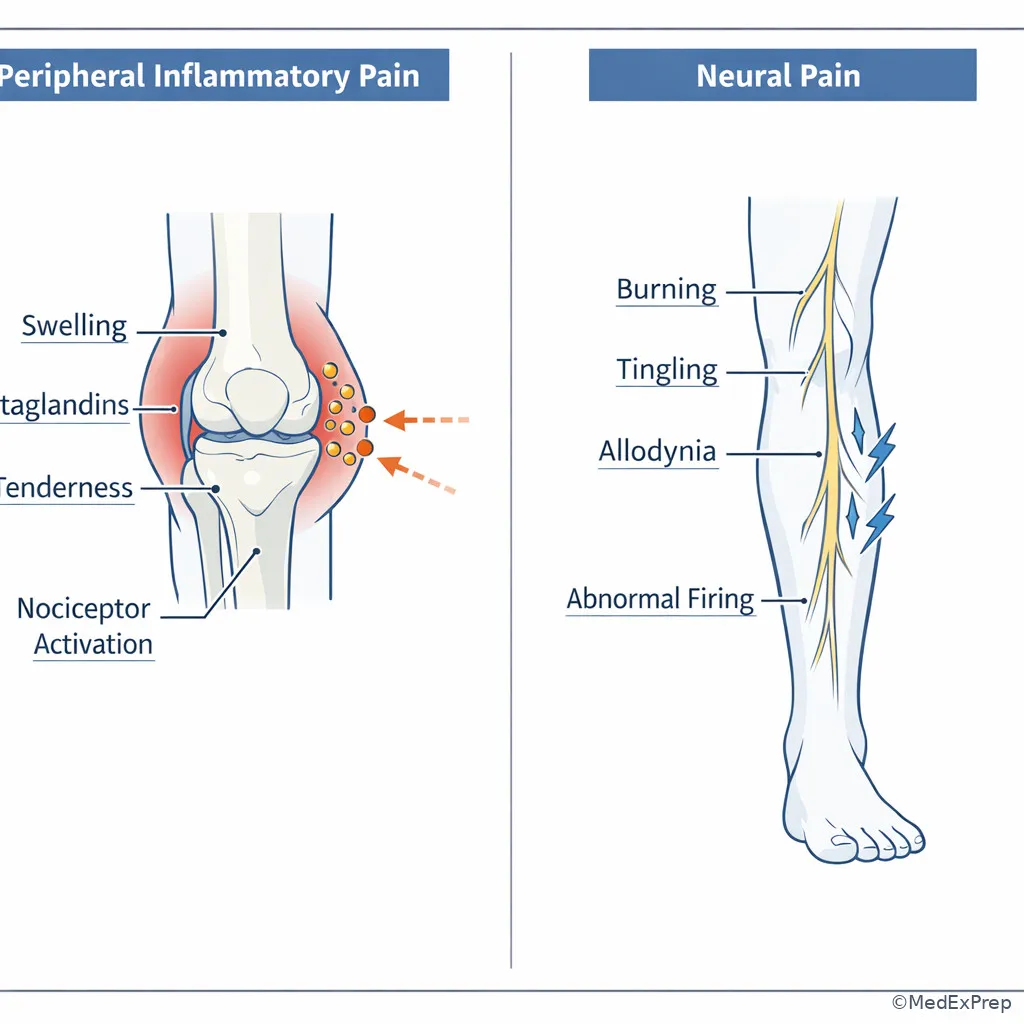
Fig 3. Peripheral inflammatory pain versus neural pain visual comparison
Concept flow: When inflammatory clues should drive the first-pass choice
Look for local inflammatory clues
Swelling, warmth, tenderness, and movement-related worsening are stronger than pain score alone.

Is inflammation the likely driver?
If yes, consider anti-inflammatory strategies; if no, avoid escalating them as the main solution.

Screen for safety limits
Check renal function, GI bleed risk, anticoagulants, HF, and age-related vulnerability.

Set monitoring
Track pain with activity, function, blood pressure, renal status, and adverse effects.

Recall: This is the first topic in the course, so there is no prior lesson to build from. Keep this core framework in mind because the next topic will ask you to classify pain as nociceptive, neuropathic, or nociplastic based on the pathway clues introduced here.
Memory anchor: HOT joint, NSAID thought. Warmth, swelling, tenderness, and movement pain are the “HOT” clues that make peripheral inflammatory targeting more plausible.
Pharmacist Action: NOTICE: localized inflammation, recent injury, arthritis flare, or postoperative tissue pain. SAY: “This pattern suggests peripheral inflammatory signaling, so anti-inflammatory therapy may fit if safety factors permit.” MONITOR: renal function, blood pressure, edema, GI symptoms, and functional improvement. HOLD/CLARIFY/ESCALATE: clarify or avoid chronic NSAID intensification in CKD, HF, active ulcer/bleeding risk, or concurrent high-risk antithrombotic therapy unless benefits clearly outweigh risks and the prescriber agrees.

B. Worked example

A 72-year-old woman with osteoarthritis, HFpEF, atrial fibrillation on apixaban, and hypertension reports acute knee swelling and pain after gardening. Home medications include acetaminophen 650 mg by mouth every 8 hours, apixaban 5 mg by mouth twice daily, furosemide, losartan, and topical diclofenac used intermittently. She asks whether ibuprofen 600 mg by mouth three times daily for a week is the best initial therapy because the pain worsens with walking. Her foot tingling from chronic diabetes is unchanged.

Identify task: mechanism-fit plus safety assessment. Extract key facts: acute swollen tender joint with movement-provoked pain supports inflammatory transduction. Apply rule: an NSAID mechanism fits the pathway, but systemic ibuprofen is unsafe here because of anticoagulation, HF, and renal-hemodynamic risk. Eliminate distractors: her diabetic foot tingling is a tempting clue toward a neuropathic agent, but it is chronic and unchanged; it does not explain the current flare. Verify: recommend safer localized strategies and communication with the prescriber regarding anti-inflammatory options that minimize systemic harm.

C. Exam trap

Common wrong answer: “Avoid all anti-inflammatory thinking because she has diabetic neuropathy.” WHY IT IS TEMPTING: mixed-pain patients often trigger overgeneralization from one chronic pain condition to every new complaint. SINGLE CLUE THAT ELIMINATES IT: the current pain is acutely swollen, localized, and movement-related, which is a separate inflammatory pattern.

D. Checkpoint

Question: Which finding most strongly supports peripheral sensitization as the dominant current mechanism?

  1. Localized joint warmth and tenderness after tissue strain
  2. Light touch causing burning pain over both feet for months
  3. Diffuse pain with fatigue and nonrestorative sleep
  4. Sudden electric shock pain radiating down one leg

Answer: A. Localized joint warmth and tenderness after tissue strain.

  • A. Tempting because it describes a familiar inflammatory picture; it is right because local warmth and tenderness after strain match inflammatory mediator-driven nociceptor sensitization.
  • B. Tempting because it signals severe pain; it is wrong because allodynia and burning in both feet suggest neuropathic or centrally amplified processing rather than local inflammatory transduction.
  • C. Tempting because diffuse pain can be severe and chronic; it is wrong because the symptom cluster points more toward nociplastic central amplification.
  • D. Tempting because radiating pain is common in musculoskeletal complaints; it is wrong because electric shock radiation is more consistent with nerve transmission pathology.
If you missed this: Review 1.1.1.2 Peripheral sensitization and inflammatory signaling — focus on the discriminator between local inflammatory clues and sensory distortion clues.
Quick Recall:

  • The pathway step most directly reduced by prostaglandin inhibition is transduction.
  • True or False: High pain intensity alone proves an NSAID is the best mechanism-based choice. False.
  • Name 3 inflammatory clues: swelling, warmth, tenderness with movement.

1.1.1.3 Transmission, dorsal horn processing, and descending modulation

A. Explanation

The key decision conflict is choose a strategy that affects neuronal transmission/modulation versus reject a purely peripheral strategy. The single finding that resolves this is the presence of nerve-like descriptors or signs of amplified spinal processing: burning, electric, shooting, radiating pain; allodynia; hyperalgesia; pain out of proportion to tissue findings. See Fig 4. Transmission refers to signal movement from nociceptor to spinal cord and upward; modulation refers to what happens to that signal in the dorsal horn and descending inhibitory systems.

WHY THIS IS TESTED: many analgesics affect more than one part of the pathway, so exams test whether you can identify the dominant mismatch. A patient whose main clue is altered sensory processing may still have some inflammation, but the mechanism-based answer often shifts toward adjuvant or centrally active therapy because the pain is being sustained by abnormal neuronal signaling or insufficient descending inhibition.

Descending inhibitory pathways use serotonin, norepinephrine, and endogenous opioids to dampen nociceptive traffic. When that inhibition is deficient, the patient may report persistent, amplified pain even after the original tissue injury should be improving. This is one reason SNRIs and TCAs appear in pain pharmacotherapy despite being known as antidepressants. They are not selected because the patient “seems depressed”; they are selected when the pain biology suggests altered central modulation. Pharmacists should avoid overdiagnosing the pain type but should identify when the medication list misses a plausible mechanism target.

Fig 4. Dorsal horn and descending modulation map
Exam takeaway: Allodynia and hyperalgesia are pathway clues that push attention toward modulation failure.
flowchart TD
A[Peripheral input] --> B[Dorsal horn synapse]
B --> C[Ascending pain signal]
D[Descending serotonin and norepinephrine inhibition] --> B
E[Endogenous opioids] --> B
F[Central sensitization] --> B
G[Allodynia and hyperalgesia] --> F
Spinal modulation illustration
Exam takeaway: Dorsal horn amplification and weak descending inhibition explain why pain can persist beyond the original injury signal.
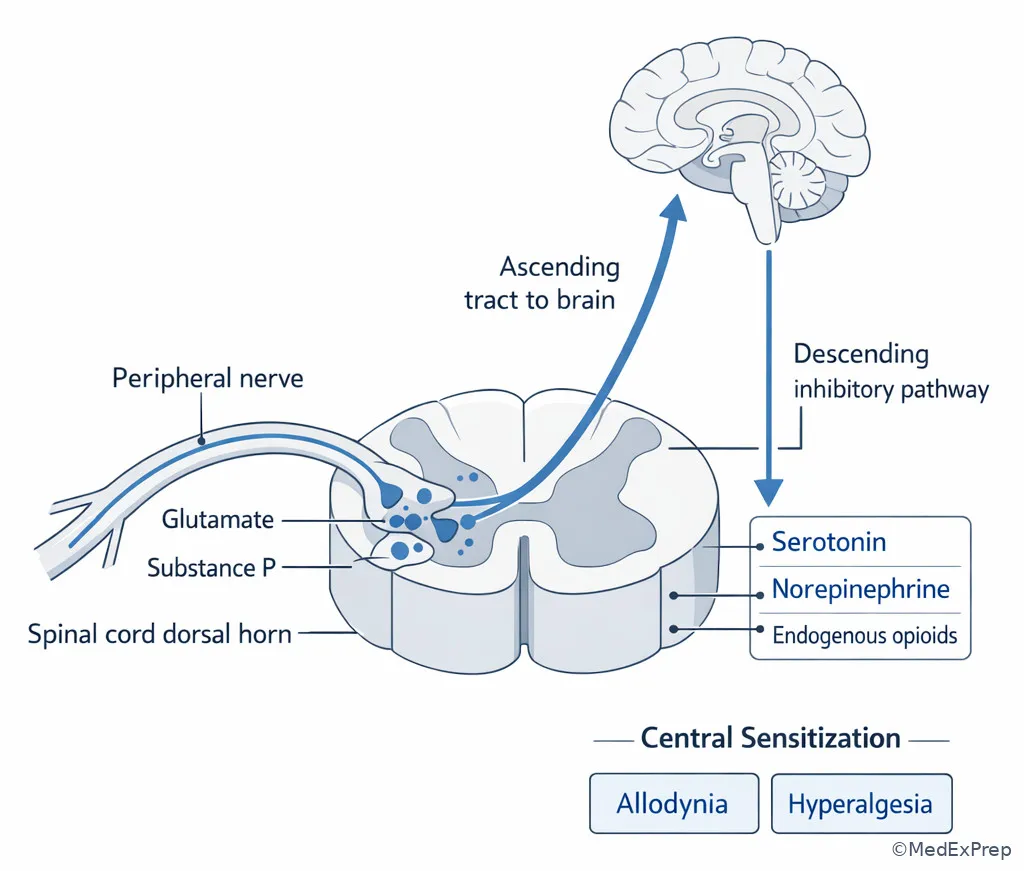
Spinal modulation illustration
Concept flow: When to think transmission or modulation rather than peripheral injury alone
Read the pain adjectives
Burning, electric, radiating, touch-evoked, and disproportionate pain are the highest-yield clues.

Is the pathway abnormal at the nerve or spinal level?
If yes, reject reflexive dose escalation of purely peripheral therapy as the main move.

Select mechanism-aligned options
Consider agents that affect abnormal firing or descending inhibition, with organ-function and sedation review.

Monitor response by symptom quality
Track burning, allodynia, sleep impact, and function, not only numeric pain score.

High-Yield Connection: This concept is tested alongside Nociceptive Neuropathic And Nociplastic Pain. The next lesson will classify these patterns formally; here, your job is to see why burning/radiating pain and allodynia pull you away from a purely anti-inflammatory approach.
Pharmacist Action: NOTICE: electric, burning, radiating, touch-evoked pain or worsening despite healed tissue. SAY: “The language suggests neural transmission or central amplification, so we should reassess whether the current regimen targets the right mechanism.” MONITOR: sedation, dizziness, blood pressure where relevant, renal function for renally cleared adjuvants, and functional gains over 2–6 weeks depending on therapy. HOLD/CLARIFY/ESCALATE: escalate urgently if new weakness, bowel/bladder symptoms, or rapidly progressive neurologic findings appear.

B. Worked example

A 47-year-old woman with depression, obesity, and chronic low back pain takes naproxen 500 mg by mouth twice daily and omeprazole 20 mg daily. She reports a new “shooting, electric pain” from the low back to the lateral foot after lifting a box, along with pain from light touch over the calf. Lumbar x-ray from last year showed degenerative changes. Serum creatinine is normal. She asks whether switching from naproxen to a different NSAID is the most appropriate next step.

Identify task: determine whether treatment should still center on inflammatory transduction. Extract key facts: shooting, electric, radiating pain and allodynia are pathway clues for abnormal transmission/modulation. Apply rule: reject the idea that a stronger or different NSAID is automatically the best mechanism-based change. Eliminate distractors: chronic degenerative changes on x-ray are tempting noise; they can falsely anchor the learner to nociceptive osteoarthritic pain. Verify: recommend reassessment for likely neuropathic features, align therapy toward the neural mechanism, and communicate red flags if weakness or bladder symptoms emerge.

C. Exam trap

Common wrong answer: “Choose a different NSAID because the current one failed.” WHY IT IS TEMPTING: students often treat analgesic nonresponse as a potency problem. SINGLE CLUE THAT ELIMINATES IT: electric radiating pain with touch-evoked discomfort points to neural transmission/modulation, not simple underdosed inflammation therapy.

D. Checkpoint

Question: Which symptom most strongly suggests a modulation abnormality rather than uncomplicated peripheral transduction?

  1. Allodynia when clothing brushes the skin
  2. Localized swelling after ankle sprain
  3. Pain only with direct pressure on a bruised area
  4. Immediate sharp pain at the moment of a cut

Answer: A. Allodynia when clothing brushes the skin.

  • A. Tempting because it is a classic board clue; it is right because pain from a normally nonpainful stimulus strongly suggests central or spinal amplification.
  • B. Tempting because swelling is associated with pain; it is wrong because it fits peripheral inflammatory transduction.
  • C. Tempting because bruises are painful; it is wrong because direct pressure pain alone does not imply abnormal modulation.
  • D. Tempting because it is acute and dramatic; it is wrong because this is typical initial nociceptor activation and A-delta transmission rather than allodynic amplification.
If you missed this: Review 1.1.1.3 Transmission, dorsal horn processing, and descending modulation — focus on the discriminator that allodynia indicates abnormal modulation rather than simple tissue injury.

1.1.1.4 Perception, central amplification, and the biopsychologic overlay

A. Explanation

The decision conflict here is respect the reality of pain perception without reducing it to “just psychological,” and choose multimodal reasoning versus one-dimensional escalation. The single rule that resolves this is: when pain is diffuse, disproportionate to tissue findings, associated with fatigue, sleep disruption, cognitive symptoms, or broad sensitivity, think altered central processing and perception as part of the mechanism. See Fig 5. This does not mean the pain is unreal. It means the CNS is participating strongly in the pain experience.

WHY THIS IS TESTED: board stems often include mood disorder, insomnia, trauma history, or high distress as distractors. The wrong move is to dismiss pain or to assume opioid escalation is the universal fix. The right move is to recognize that higher-order processing and central amplification affect both symptom burden and the likely benefit of multimodal care. Pharmacists should frame this as mechanism-based care planning, not psychiatric labeling.

Perception involves cortical and subcortical interpretation of incoming signals. Attention, expectation, fear, depression, and sleep deprivation can intensify perceived pain. When central amplification dominates, local tissue findings may seem modest relative to the patient’s severity. A purely peripheral strategy may underperform. In practice, this points toward functional goals, nonpharmacologic integration, and careful choice of centrally acting agents when appropriate. Upcoming lessons will formalize nociplastic pain, but already you should recognize the pattern. See Fig 6 for the comparison image.

Fig 5. Central amplification overview
Exam takeaway: Diffuse pain with sleep and fatigue clues should trigger multimodal thinking instead of reflexive anti-inflammatory escalation.
flowchart LR
A[Peripheral input] --> B[Brain interpretation]
C[Poor sleep] --> B
D[Mood distress] --> B
E[Attention and threat focus] --> B
B --> F[Increased pain perception]
G[Central amplification] --> F
H[Multimodal strategy] --> G
Fig 6. Central amplification clinical pattern
Exam takeaway: Diffuse tenderness, fatigue, and sleep disruption are pattern clues for centrally amplified pain processing.
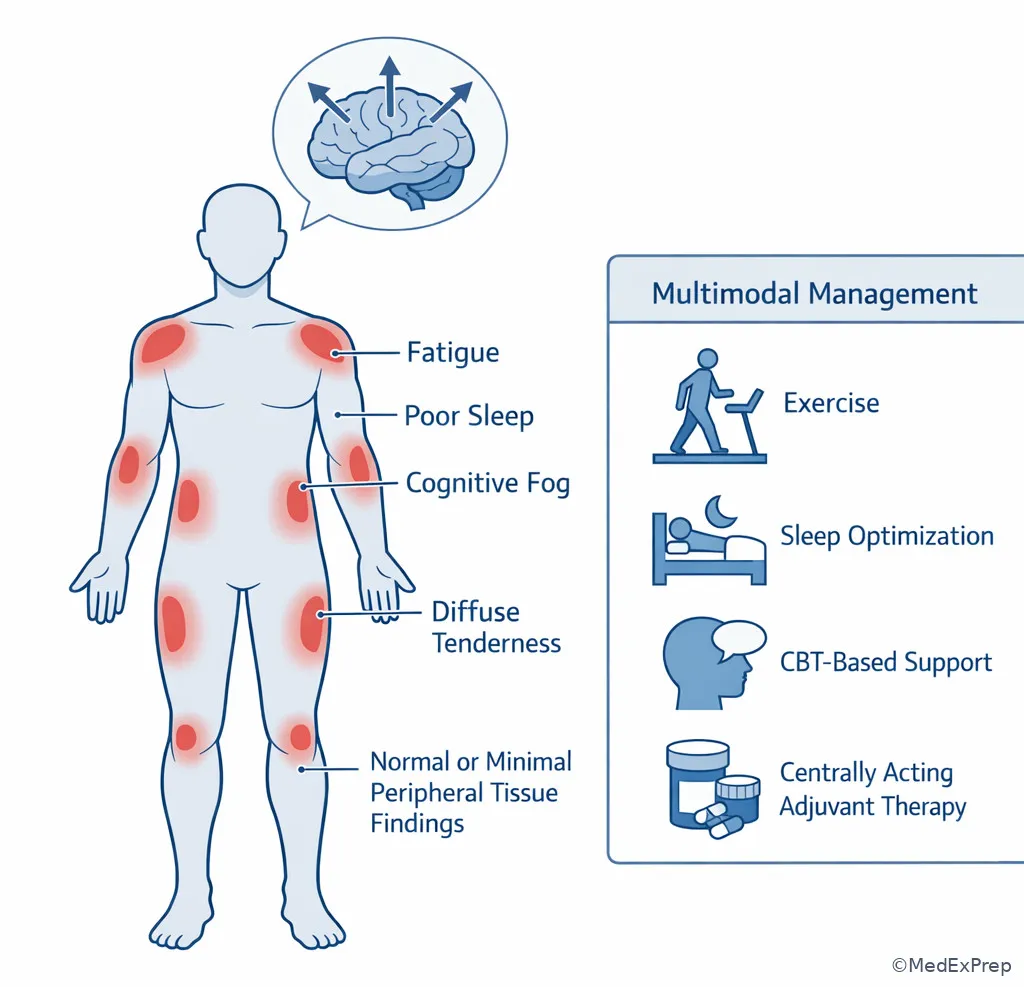
Fig 6. Central amplification clinical pattern
Concept flow: How to respond when central amplification clues dominate
Recognize the cluster
Diffuse pain, fatigue, poor sleep, and broad sensitivity matter more than one isolated tender area.

Reject one-pathway thinking
Do not assume stronger anti-inflammatory or opioid therapy alone will solve centrally amplified pain.

Build a multimodal plan
Set function-based goals, align medication choice, and integrate nonpharmacologic strategies.

Monitor what matters
Track sleep, fatigue, activity tolerance, and global function in addition to pain score.

Pharmacist Action: NOTICE: diffuse pain, fatigue, insomnia, cognitive complaints, and limited tissue findings. SAY: “This pattern may reflect amplified pain processing, so a multimodal plan is usually more effective than simply intensifying one analgesic.” MONITOR: function, sleep quality, mood burden, adverse effects, and realistic time-to-benefit. HOLD/CLARIFY/ESCALATE: escalate if uncontrolled pain is accompanied by suicidality, severe depression, or other urgent safety concerns requiring immediate evaluation.

B. Worked example

A 38-year-old woman with migraines, irritable bowel syndrome, and major depressive disorder reports 2 years of diffuse musculoskeletal pain. Medications include sertraline 100 mg by mouth daily, acetaminophen as needed, and sumatriptan as needed. She says “everything hurts,” sleeps 4 to 5 hours nightly, and has tenderness in multiple regions without swelling. CRP is normal. She asks whether starting scheduled naproxen 500 mg by mouth twice daily is the most appropriate next step because her friend improved on it.

Identify task: match the stem to pathway biology. Extract key facts: diffuse pain, sleep disturbance, IBS and migraine overlap, normal inflammatory markers, and chronicity suggest central amplification. Apply rule: reject the idea that peripheral anti-inflammatory therapy alone best addresses this pattern. Eliminate distractors: normal CRP is supportive but not decisive; the broader symptom cluster is the real discriminator. Verify: recommend a multimodal, function-centered plan and careful review of medication interaction/safety if considering centrally acting options.

C. Exam trap

Common wrong answer: “Use normal inflammatory labs to conclude the pain is not legitimate.” WHY IT IS TEMPTING: learners may equate objective inflammation with validity. SINGLE CLUE THAT ELIMINATES IT: central amplification causes real pain despite limited peripheral inflammatory findings.

D. Checkpoint

Question: Which additional finding best supports a major perception/central amplification component?

  1. Nonrestorative sleep and diffuse tenderness without swelling
  2. Single swollen wrist after a fall
  3. Immediate lancinating pain after touching a hot pan
  4. Pain limited to a bruised shin with palpation only

Answer: A. Nonrestorative sleep and diffuse tenderness without swelling.

  • A. Tempting because it bundles several broad clues; it is right because diffuse pain plus sleep dysfunction and absent local inflammation suggests central amplification.
  • B. Tempting because acute pain can be intense; it is wrong because a swollen wrist after trauma is more consistent with local peripheral nociception.
  • C. Tempting because it sounds dramatic; it is wrong because it reflects acute nociceptor activation from thermal injury.
  • D. Tempting because bruises can remain tender; it is wrong because isolated local palpation pain does not imply widespread central processing abnormalities.
If you missed this: Review 1.1.1.4 Perception, central amplification, and the biopsychologic overlay — focus on the discriminator that diffuse pain with sleep/fatigue clues suggests central amplification, not absence of real pain.
Quick Recall:

  • True or False: Normal inflammatory markers rule out a pain mechanism requiring treatment. False.
  • The symptom cluster most associated with central amplification includes diffuse pain, fatigue, and poor sleep.
  • Name one reason perception matters on exam stems: it changes which therapies are likely to work and what outcomes to monitor.

1.1.1.5 Pharmacotherapy implications: matching drug class to pathway

A. Explanation

This final integration section asks the most board-relevant question: given the pathway clue, which medication category is reasonable, and which is the tempting mismatch? The single resolving rule is to choose the class whose mechanism acts at the dominant pain level while screening for comorbidity and safety constraints. See Fig 1 and Fig 6. For inflammatory transduction, anti-inflammatory therapy is often more plausible. For abnormal neural transmission or impaired descending inhibition, adjuvant analgesic strategies become more plausible. For mixed or centrally amplified patterns, multimodal care and function-based monitoring matter most.

WHY THIS IS TESTED: the BCPMP perspective is not to “diagnose pain perfectly,” but to identify the medication-related problem and recommend the safest mechanism-aligned next step. Questions may ask what requires clarification, what to monitor, or which regimen is mismatched. The answer often depends on one discriminating clue: local inflammation, sensory distortion, diffuse amplification, or mixed pathology.

Pharmacists should also anticipate common medication safety conflicts. Systemic NSAIDs may fit inflammatory pain yet be poor choices in CKD, GI bleed risk, HF, or anticoagulation. Gabapentinoids may fit abnormal transmission but become unsafe with sedation burden, falls, or renal misdosing. SNRIs may fit modulation failure but require review of blood pressure, serotonergic combinations, and withdrawal concerns. Opioids can affect transmission and perception but are not automatically first-line for every severe pain complaint, especially when the dominant mechanism is not opioid-responsive or when safety risks outweigh expected benefit.

Mechanism-to-drug class infographic
Exam takeaway: The best drug choice depends on where the pain pathway is dysregulated and what safety limits are present.
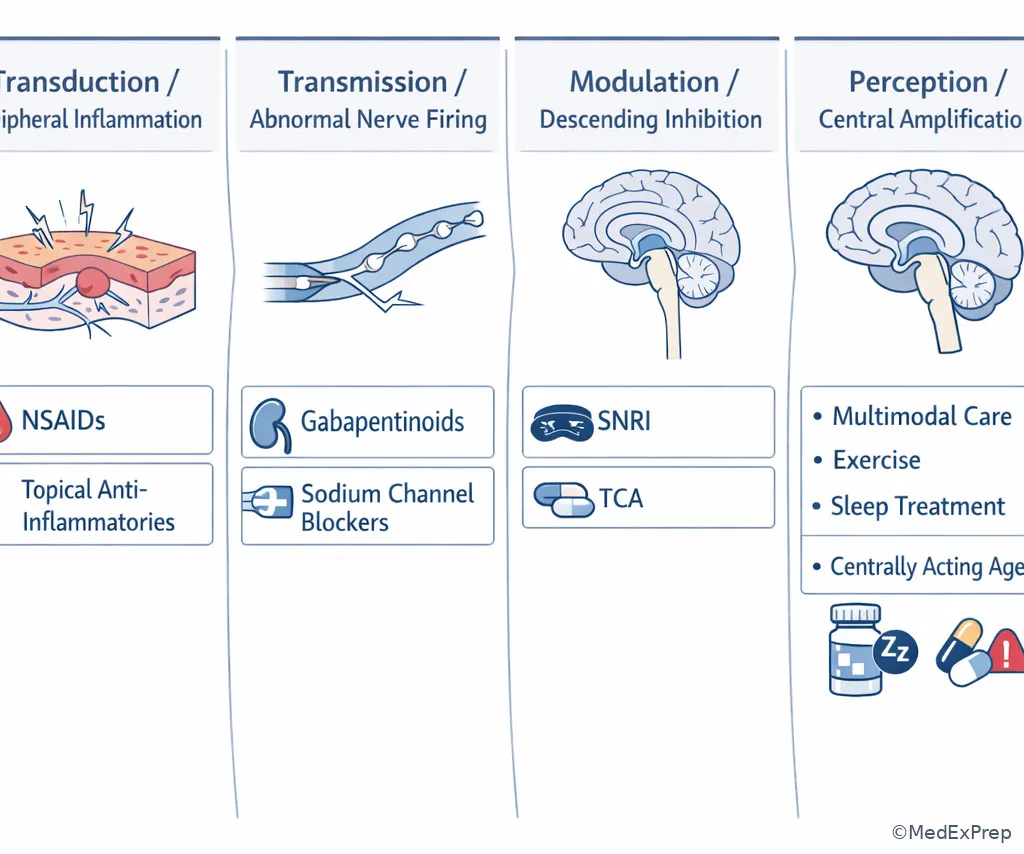
Mechanism-to-drug class infographic
Medication mismatch warning illustration
Exam takeaway: Analgesic failure often reflects mechanism mismatch or safety limits rather than simply needing a higher dose.
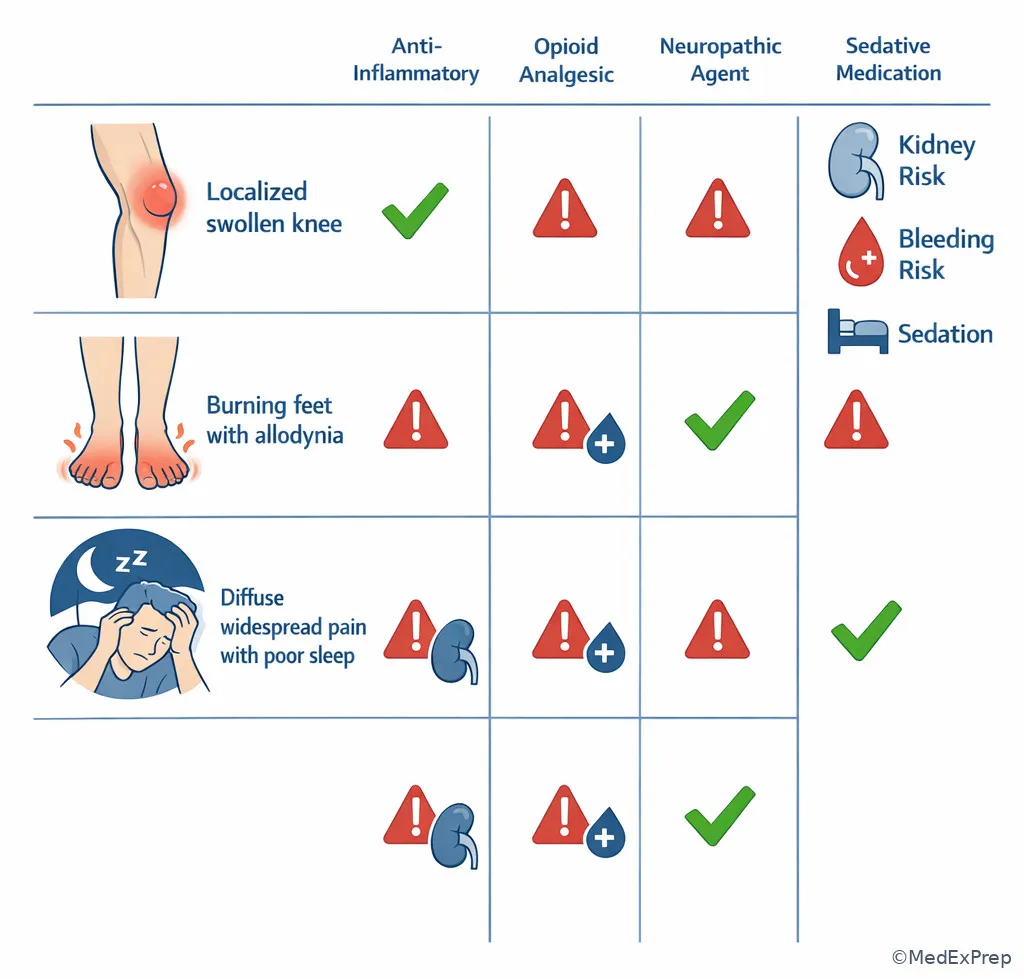
Medication mismatch warning illustration
Concept flow: Mechanism-based pharmacist recommendation sequence
Define the dominant pathway
Inflammatory, neural transmission, central amplification, or mixed pattern.

Choose versus reject
Pick the class that fits the pathway; reject the tempting class that only fits severity.

Apply safety screen
Renal function, GI bleed risk, interactions, sedation, age, pregnancy, and care setting.

Set follow-up
Track function, specific symptom quality, safety markers, and need for referral or escalation.

Memory anchor: PATH to a recommendation: Place the pain on the pathway, Align the drug class, Triage safety limits, Hold or escalate when the profile does not fit.
Pharmacist Action: NOTICE: whether current therapy targets the dominant mechanism. SAY: “This regimen may be reasonable generally, but for this patient the mechanism clue suggests a different first adjustment.” MONITOR: mechanism-specific outcomes such as movement pain, allodynia, sleep, function, renal labs, blood pressure, GI tolerance, and sedation. HOLD/CLARIFY/ESCALATE: hold recommendations that exceed authority or require diagnostic confirmation; communicate the medication-related problem and a safer alternative or referral plan.

B. Worked example

A 66-year-old man is discharged after thoracotomy. He has CAD, COPD, CKD stage 3b, and chronic insomnia. Discharge medications include acetaminophen 1,000 mg by mouth every 8 hours, oxycodone immediate-release 5 mg by mouth every 6 hours as needed, and ibuprofen 600 mg by mouth every 8 hours for 10 days. He reports severe incisional tenderness with coughing, but also numb burning pain near the scar. He takes aspirin 81 mg daily and sertraline 50 mg daily.

Identify task: identify the drug-therapy problem in a mixed-pathway patient during transition of care. Extract key facts: nociceptive postoperative tissue pain plus a neuropathic scar component; CKD, CAD, aspirin, and COPD raise safety concerns. Apply rule: do not assume one drug handles all mechanisms safely. The ibuprofen is mechanism-plausible for inflammatory tissue pain but high risk in CKD/CAD; oxycodone may help acute severe pain but requires careful monitoring given COPD and insomnia. Eliminate distractors: burning near the scar tempts complete pivot away from nociceptive management, but tissue pain remains present. Verify: communicate that this is mixed pain requiring safer multimodal planning and close monitoring rather than automatic continuation of every discharge medication.

C. Exam trap

Common wrong answer: “Pick the single strongest analgesic and ignore the pathway mix.” WHY IT IS TEMPTING: mixed pain feels complicated, so learners simplify to one potent option. SINGLE CLUE THAT ELIMINATES IT: the stem contains both inflammatory and neural descriptors, meaning benefit and safety must be balanced across mechanisms.

D. Checkpoint

Question: Which statement best reflects a mechanism-based pharmacist approach?

  1. If pain is severe, intensify the most potent available analgesic regardless of symptom quality.
  2. Choose therapy by dominant pathway clue, then verify comorbidity and interaction safety.
  3. Normal imaging rules out centrally amplified pain.
  4. A poor response to NSAIDs confirms opioid therapy is the best next step.

Answer: B. Choose therapy by dominant pathway clue, then verify comorbidity and interaction safety.

  • A. Tempting because severe pain can prompt urgency; it is wrong because mechanism mismatch and safety constraints can make a potent drug the wrong answer.
  • B. Tempting because it sounds algorithmic; it is right because board-style pain pharmacotherapy depends on pathway recognition followed by individualized safety review.
  • C. Tempting because learners overvalue objective imaging; it is wrong because central amplification can exist despite limited structural findings.
  • D. Tempting because nonresponse may look like under-treatment; it is wrong because NSAID failure can reflect wrong mechanism, not automatic need for opioids.
If you missed this: Review 1.1.1.5 Pharmacotherapy implications: matching drug class to pathway — focus on the discriminator that mechanism fit comes before simple potency escalation.

Tables

Pathway step Main exam clue Typical symptom language Medication implication
Transduction Tissue injury or inflammation Tender, swollen, movement-provoked, localized Anti-inflammatory strategy more plausible if safe
Transmission Abnormal nerve signal spread Burning, electric, shooting, radiating Adjuvant/neural pathway targeting becomes more plausible
Modulation Amplified spinal or descending control problem Allodynia, hyperalgesia, pain out of proportion Central or adjuvant strategies; avoid purely peripheral thinking
Perception Higher-order amplification Diffuse pain, fatigue, poor sleep, distress impact Multimodal plan and function-based follow-up
Pattern Choose first-pass thinking Reject as primary move Why the rejection matters
Localized swollen inflammatory flare Peripheral inflammatory targeting Assuming a neural-only regimen is best Misses prostaglandin-driven transduction
Burning allodynic foot pain Neural transmission/modulation targeting Escalating NSAID because pain score is high Severity does not equal inflammatory mechanism
Diffuse pain with sleep disturbance Central amplification and multimodal plan One-dimensional anti-inflammatory escalation Fails to address perception and central processing
Mixed postoperative tissue plus nerve pain Multimodal, safety-screened combination thinking Single “strongest” drug strategy Mixed mechanisms need balanced targeting and monitoring
Finding in stem Most likely dominant mechanism Closest confounder Single discriminator
Warm swollen joint after overuse Peripheral sensitization Neuropathic pain Local inflammation rather than burning sensory distortion
Electric pain down leg with touch pain Transmission/modulation abnormality Musculoskeletal strain Radiation and allodynia
Diffuse body pain with fatigue and insomnia Central amplification/perception-heavy state Inflammatory arthritis Broad symptoms with limited local inflammatory findings
Pain from clothing brushing skin Modulation abnormality Simple tenderness Normally nonpainful stimulus becomes painful
Immediate sharp pain, then dull ache Sequential A-delta then C-fiber signaling Single-fiber mechanism Two-phase temporal pattern
Drug category Best pathway fit Common safety screen Monitoring focus
NSAIDs Peripheral inflammatory transduction CKD, GI bleed, HF, anticoagulation, BP Movement pain, renal function, edema, GI tolerance
Acetaminophen Mild nociceptive support; not strongly anti-inflammatory Liver disease, total daily dose, combination products Total dose, symptom relief, adherence
Gabapentinoid-type strategy Neural transmission abnormalities Renal dosing, sedation, falls, misuse risk Dizziness, somnolence, renal function, allodynia
SNRI/TCA-type strategy Descending modulation and central amplification Interactions, BP, anticholinergic burden, suicidality Function, sleep, BP, adverse effects, time-to-benefit
Opioid strategy Severe pain when benefits outweigh risks; mixed mechanism contexts Sedation, respiratory risk, interactions, constipation Respiratory status, sedation, bowel regimen, function

Exam Traps & Differentiators

  • Most common wrong answer: escalating the familiar analgesic simply because pain is severe. Why: learners confuse severity with mechanism. Fix: identify whether the stem’s decisive clue is inflammatory, neural, or centrally amplified.
  • Looks similar but isn’t: inflammatory tenderness versus allodynia. Both can sound like “touch hurts,” but allodynia means a normally nonpainful stimulus is painful, pointing to modulation failure rather than local inflammation.
  • Looks similar but isn’t: chronic musculoskeletal pain versus neuropathic pain. Chronicity alone does not define mechanism; “burning/electric/radiating” matters more than duration.
  • Looks similar but isn’t: high ESR or old imaging findings versus current pathway clues. These details are often noise unless they directly match the symptom pattern.
If the stem says... Think... Do not reflexively think...
Burning, electric, shooting Abnormal neural transmission “Need a stronger NSAID”
Allodynia, hyperalgesia Modulation/central sensitization Simple local inflammation only
Warmth, swelling, movement pain Peripheral inflammatory transduction Diffuse central amplification as the sole explanation
Diffuse pain, fatigue, poor sleep Central amplification and multimodal care Normal labs mean no real pain problem
Poor response to one class Possible mechanism mismatch Automatic need for opioid escalation
Common traps & distractors: Old degenerative imaging can lure you toward nociceptive-only thinking; mild inflammatory labs can falsely justify NSAID escalation; depression in the history can distract you from the pain pathway instead of helping you recognize altered modulation and perception.

Related future traps: in Nociceptive Neuropathic And Nociplastic Pain, you will separate these patterns formally; in Acute And Chronic Pain States, you will learn why chronicity does not automatically equal opioid candidacy or central amplification.

Review connection: The traps above test mechanism recognition before drug selection. If any felt unfamiliar, revisit 1.1.1.2 Peripheral sensitization and inflammatory signaling and 1.1.1.3 Transmission, dorsal horn processing, and descending modulation before attempting the Self-check quiz.

Algorithm / Approach

Concept flow: Pain etiology triage for pharmacist pharmacotherapy planning
Define the pharmacist task
Is the question asking for best regimen adjustment, safety concern, monitoring plan, or need for clarification/escalation?

Classify the dominant pathway clue
Local inflammation → transduction; burning/radiating → transmission; allodynia/hyperalgesia → modulation; diffuse fatigue/sleep cluster → central amplification.

Match therapy to mechanism
Choose the class that acts at the dominant level; reject tempting alternatives chosen only by pain intensity.

Apply safety and scope screen
Check renal function, bleeding risk, sedation, interactions, pregnancy, age, and whether urgent referral or prescriber clarification is needed.

Set monitoring and follow-up
Monitor mechanism-specific outcomes, adverse effects, function, and escalation triggers.

Rapid Review

  • Transduction → tissue mediator-driven nociceptor activation; think inflammation clues.
  • A-delta fibers → fast, sharp, localized pain; first wave after injury.
  • C fibers → slow, dull, burning, diffuse pain; lingering second wave.
  • Peripheral sensitization → lowered threshold at the injury site; touch/pressure hurts more locally.
  • Transmission abnormality → burning, electric, radiating descriptors separate it from simple inflammation.
  • Modulation failure → allodynia or hyperalgesia is the discriminator.
  • Perception-heavy state → diffuse pain with fatigue and poor sleep separates it from localized injury.
  • NSAID success pattern → swollen tender movement-provoked pain more than sensory distortion.
  • NSAID failure → may mean mechanism mismatch, not inadequate pain seriousness.
  • Adjuvant-friendly pattern → abnormal sensation and allodynia more than warmth/swelling.
  • Mixed pain → do not force one-pathway logic; combine mechanism thinking with safety review.
  • Old imaging → weak discriminator compared with current symptom language.
  • Normal inflammatory labs → do not rule out clinically important centrally amplified pain.
  • Pharmacist best next step → identify pathway, align drug class, then screen interactions and organ function.

Self-check quiz

1. A 34-year-old man with ankle sprain takes ibuprofen 400 mg by mouth every 6 hours as needed and reports localized swelling, warmth, and tenderness at the lateral ankle. Which pathway step is most directly linked to prostaglandin-driven nociceptor activation in this stem?

  1. Transduction
  2. Transmission
  3. Perception
  4. Descending inhibition

2. A 52-year-old woman with diabetes takes acetaminophen 1,000 mg by mouth three times daily and reports 6 months of burning foot pain with painful light touch. Which finding most strongly supports modulation or central sensitization rather than localized inflammatory pain?

  1. Allodynia when bedsheets touch the feet
  2. Warmth and swelling of one metatarsophalangeal joint
  3. Pain only when stepping on a stone
  4. Sharp pain immediately after stepping on a tack

3. A 68-year-old woman with CKD stage 3, HF, and osteoarthritis takes acetaminophen 650 mg by mouth every 8 hours and asks about ibuprofen 600 mg by mouth three times daily for a swollen painful knee after overuse. The pain is localized and worsens with walking; she has no burning or radiating symptoms. What is the most appropriate pharmacist recommendation?

  1. Recommend systemic ibuprofen because the pathway fit outweighs all safety concerns
  2. Recognize inflammatory pathway fit but clarify safer alternatives because systemic NSAID risk is high
  3. Recommend duloxetine immediately because all osteoarthritis pain is centrally amplified
  4. Advise doubling acetaminophen to 2,000 mg by mouth every 8 hours because noninflammatory options are safer

4. A 45-year-old man with obesity and chronic low back pain takes naproxen 500 mg by mouth twice daily. He now describes new electric pain radiating to the foot with pain from light touch over the calf. Lumbar x-ray last year showed degenerative changes. What is the most appropriate interpretation for the pharmacist to communicate?

  1. The current symptom pattern suggests abnormal neural transmission/modulation rather than simple inflammatory pain alone
  2. The old x-ray finding proves the pain remains purely nociceptive and should be treated with a different NSAID
  3. The pain is probably exaggerated because imaging findings are chronic
  4. The most appropriate next step is automatic opioid escalation because NSAID therapy failed

5. A 40-year-old woman with IBS, migraine, and depression takes sertraline 100 mg by mouth daily and acetaminophen as needed. She reports diffuse body pain, poor sleep, and fatigue for 18 months with normal CRP and no swollen joints. Which approach is most appropriate?

  1. Focus on central amplification and a multimodal, function-based plan
  2. Escalate to scheduled naproxen because the absence of swelling does not matter
  3. Conclude the pain is not clinically significant because inflammatory markers are normal
  4. Recommend opioid initiation because diffuse pain indicates severe tissue injury

6. A 71-year-old man with CAD, CKD stage 3b, and diabetic neuropathy is discharged on acetaminophen 1,000 mg by mouth every 8 hours, ibuprofen 600 mg by mouth every 8 hours for 7 days, and oxycodone 5 mg by mouth every 6 hours as needed after a rib fracture. He reports localized pleuritic tenderness plus burning skin sensitivity near the fracture line. Which medication-related problem most requires clarification?

  1. The ibuprofen is mechanism-plausible for tissue pain but high-risk because CKD and CAD make systemic NSAID continuation unsafe
  2. The oxycodone should be stopped immediately because opioids never help mixed pain
  3. The acetaminophen should be avoided because localized tenderness proves inflammation only
  4. The burning sensitivity means all nociceptive therapy should be discontinued

7. A 63-year-old woman with diabetic kidney disease, generalized anxiety disorder, and chronic shoulder osteoarthritis takes meloxicam 15 mg by mouth daily, acetaminophen 650 mg by mouth every 8 hours, and gabapentin 300 mg by mouth nightly. She now reports a new hot swollen shoulder after overuse while her longstanding burning foot pain is unchanged. Which interpretation best guides the next recommendation?

  1. The current shoulder flare most likely reflects peripheral inflammatory transduction despite coexisting neuropathic pain elsewhere
  2. The chronic burning feet prove the shoulder pain must also be neuropathic
  3. The existing gabapentin makes inflammatory pain impossible
  4. The best move is to ignore the shoulder mechanism and focus only on total pain score

8. A 57-year-old man with depression, insomnia, and chronic neck pain takes diclofenac 75 mg by mouth twice daily and omeprazole 20 mg daily. He reports persistent pain despite improved neck range of motion after physical therapy. The most bothersome symptom is pain from shirt collar contact and burning pain extending into the forearm. Which statement best explains why changing to celecoxib alone is unlikely to be the best next step?

  1. The dominant clue is allodynia and burning radiation, which points away from purely peripheral anti-inflammatory targeting as the sole adjustment
  2. Celecoxib is never used for musculoskeletal pain
  3. Improved range of motion means the pain is psychogenic
  4. Any chronic pain that persists after NSAID therapy requires opioid conversion

Answer key

1. Answer: A — Transduction

  • A. Transduction — Tempting because localized warmth, swelling, and tenderness are classic inflammatory cues. It is correct because prostaglandin-mediated nociceptor activation occurs at the site of tissue injury during transduction. The single stem clue is the swollen warm ankle after sprain. Sources: DiPiro Pharmacotherapy; AHFS Drug Information.
  • B. Transmission — Tempting because pain signals do travel through nerves after injury. It is incorrect for this question because the stem asks specifically about prostaglandin-driven nociceptor activation, which occurs before the signal is propagated. The discriminator is “prostaglandin-driven” plus local inflammation. Sources: DiPiro; Clinical Pharmacology.
  • C. Perception — Tempting because all pain is ultimately experienced in the brain. It is incorrect because perception is the conscious experience, not the peripheral activation step targeted by inflammatory mediators. The discriminator is localized inflammatory signs rather than diffuse central features. Sources: DiPiro; ACCP pain management guidance.
  • D. Descending inhibition — Tempting because central control influences pain intensity. It is incorrect because descending inhibition modulates spinal processing rather than initiating the pain signal at the injury site. The discriminator is direct peripheral inflammatory activation. Sources: DiPiro; AHFS.
If you missed this: Review 1.1.1.2 Peripheral sensitization and inflammatory signaling — focus on prostaglandin-driven nociceptor activation at the transduction step.

2. Answer: A — Allodynia when bedsheets touch the feet

  • A. Allodynia when bedsheets touch the feet — Tempting because it is a classic exam buzz clue. It is correct because pain from a normally nonpainful stimulus strongly supports modulation abnormality or central sensitization. The discriminator is painful light touch. Sources: DiPiro; ACCP guidance.
  • B. Warmth and swelling of one metatarsophalangeal joint — Tempting because diabetic patients can also develop inflammatory pain. It is incorrect here because this points to local inflammatory transduction, not modulation failure. The discriminator is unilateral warmth/swelling. Sources: AHFS; Clinical Pharmacology.
  • C. Pain only when stepping on a stone — Tempting because it is a real pain trigger in the foot. It is incorrect because direct noxious mechanical stimulation does not establish central sensitization. The discriminator is that the stimulus itself is painful. Sources: DiPiro.
  • D. Sharp pain immediately after stepping on a tack — Tempting because it is acute and intense. It is incorrect because immediate sharp pain reflects nociceptor activation and A-delta transmission, not allodynic modulation failure. The discriminator is the clearly painful stimulus. Sources: DiPiro; AHFS.
If you missed this: Review 1.1.1.3 Transmission, dorsal horn processing, and descending modulation — focus on allodynia as the single clue for abnormal modulation.

3. Answer: B — Recognize inflammatory pathway fit but clarify safer alternatives because systemic NSAID risk is high

  • A. Recommend systemic ibuprofen because the pathway fit outweighs all safety concerns — Tempting because localized swollen activity-related pain does fit inflammatory transduction. It is incorrect because CKD and HF are major clinical facts that limit systemic NSAID safety despite good mechanism fit. The discriminator is CKD stage 3 plus HF. Sources: Lexicomp; AHFS; FDA NSAID labeling.
  • B. Recognize inflammatory pathway fit but clarify safer alternatives because systemic NSAID risk is high — Tempting because it balances mechanism with safety. It is correct because the stem describes inflammatory pain, yet pharmacist judgment must integrate renal and cardiovascular risk before recommending systemic NSAID intensification. The discriminator is the coexistence of strong inflammatory clues with high-risk comorbidities. Sources: Lexicomp; FDA labeling; DiPiro.
  • C. Recommend duloxetine immediately because all osteoarthritis pain is centrally amplified — Tempting because duloxetine can be used in chronic musculoskeletal pain. It is incorrect because “all osteoarthritis pain is centrally amplified” is too broad, and this acute swollen flare is more directly inflammatory. The discriminator is acute localized swelling after overuse. Sources: DiPiro; Clinical Pharmacology.
  • D. Advise doubling acetaminophen to 2,000 mg by mouth every 8 hours because noninflammatory options are safer — Tempting because acetaminophen is often safer than NSAIDs. It is incorrect because the proposed dose is unsafe and exceeds usual maximum daily limits, creating a dose trap. The discriminator is the numerical dosing error. Sources: FDA acetaminophen labeling; Lexicomp.
If you missed this: Review 1.1.1.2 Peripheral sensitization and inflammatory signaling — focus on separating pathway fit from systemic NSAID safety limits in CKD and HF.

4. Answer: A — The current symptom pattern suggests abnormal neural transmission/modulation rather than simple inflammatory pain alone

  • A. The current symptom pattern suggests abnormal neural transmission/modulation rather than simple inflammatory pain alone — Tempting because electric radiation and touch pain are classic neural clues. It is correct because the decisive symptom language points to abnormal transmission/modulation, making old degenerative imaging less important. The discriminator is “electric” plus pain from light touch. Sources: DiPiro; ACCP guidance.
  • B. The old x-ray finding proves the pain remains purely nociceptive and should be treated with a different NSAID — Tempting because degenerative spine disease is common. It is incorrect because imaging does not override current neuropathic symptom descriptors. The discriminator is current sensory quality, not old anatomy. Sources: DiPiro; Clinical Pharmacology.
  • C. The pain is probably exaggerated because imaging findings are chronic — Tempting if the learner dismisses symptoms when structure seems mild. It is incorrect because allodynia and burning radiation reflect real pain pathway abnormalities. The discriminator is the specific sensory abnormality. Sources: DiPiro; ACCP guidance.
  • D. The most appropriate next step is automatic opioid escalation because NSAID therapy failed — Tempting because persistent severe pain can lead to potency thinking. It is incorrect because failure of a peripheral strategy may signal mechanism mismatch, not automatic opioid need. The discriminator is neuropathic-quality pain. Sources: DiPiro; ASHP/ACCP pain management references.
If you missed this: Review 1.1.1.3 Transmission, dorsal horn processing, and descending modulation — focus on electric/radiating/allodynic language as the discriminator over old imaging.

5. Answer: A — Focus on central amplification and a multimodal, function-based plan

  • A. Focus on central amplification and a multimodal, function-based plan — Tempting because diffuse pain, fatigue, poor sleep, and comorbid migraine/IBS create a recognizable pattern. It is correct because this cluster supports centrally amplified pain processing requiring multimodal rather than purely peripheral management. The discriminator is diffuse pain plus sleep/fatigue with no swollen joints. Sources: DiPiro; ACCP pain management references.
  • B. Escalate to scheduled naproxen because the absence of swelling does not matter — Tempting because NSAIDs are familiar analgesics. It is incorrect because the absence of local inflammatory features actually matters a great deal in mechanism selection. The discriminator is diffuse rather than localized inflammatory pain. Sources: AHFS; DiPiro.
  • C. Conclude the pain is not clinically significant because inflammatory markers are normal — Tempting if the learner over-relies on labs. It is incorrect because central amplification can produce substantial pain without elevated inflammatory markers. The discriminator is the symptom cluster, not the CRP alone. Sources: DiPiro; ACCP guidance.
  • D. Recommend opioid initiation because diffuse pain indicates severe tissue injury — Tempting because diffuse pain may sound severe and refractory. It is incorrect because diffuse pain with poor sleep and fatigue does not imply severe tissue injury and should not trigger reflexive opioid thinking. The discriminator is minimal peripheral inflammatory evidence. Sources: DiPiro; guideline-based pain stewardship principles.
If you missed this: Review 1.1.1.4 Perception, central amplification, and the biopsychologic overlay — focus on the cluster of diffuse pain, poor sleep, and fatigue as the key discriminator.

6. Answer: A — The ibuprofen is mechanism-plausible for tissue pain but high-risk because CKD and CAD make systemic NSAID continuation unsafe

  • A. The ibuprofen is mechanism-plausible for tissue pain but high-risk because CKD and CAD make systemic NSAID continuation unsafe — Tempting because it handles the mixed stem without oversimplifying. It is correct because the patient has true nociceptive fracture pain that could respond to anti-inflammatory therapy, but CKD stage 3b and CAD make systemic NSAID continuation the key medication-safety issue requiring clarification. The discriminator is the combination of inflammatory tissue pain with major NSAID risk factors. Sources: FDA NSAID labeling; Lexicomp; AHFS.
  • B. The oxycodone should be stopped immediately because opioids never help mixed pain — Tempting because mixed pain includes a neuropathic component and opioids carry risk. It is incorrect because acute fracture pain may still justify cautious opioid use depending on severity and monitoring; “never” is too absolute. The discriminator is acute localized fracture tenderness. Sources: DiPiro; opioid stewardship guidance.
  • C. The acetaminophen should be avoided because localized tenderness proves inflammation only — Tempting because learners may think acetaminophen lacks anti-inflammatory action. It is incorrect because acetaminophen remains a common supportive analgesic in nociceptive pain and localized tenderness does not contraindicate it. The discriminator is lack of hepatic safety concern in the stem. Sources: Lexicomp; FDA acetaminophen labeling.
  • D. The burning sensitivity means all nociceptive therapy should be discontinued — Tempting because burning pain sounds mechanistically specific. It is incorrect because the patient has mixed pain, not purely neuropathic pain; tissue-targeted therapy still matters. The discriminator is localized pleuritic tenderness plus fracture context. Sources: DiPiro; ACCP guidance.
If you missed this: Review 1.1.1.5 Pharmacotherapy implications: matching drug class to pathway — focus on mixed-pathway reasoning and the NSAID safety discriminator in CKD/CAD.

7. Answer: A — The current shoulder flare most likely reflects peripheral inflammatory transduction despite coexisting neuropathic pain elsewhere

  • A. The current shoulder flare most likely reflects peripheral inflammatory transduction despite coexisting neuropathic pain elsewhere — Tempting because it resists overgeneralization. It is correct because a hot swollen shoulder after overuse points to local inflammatory transduction, even though the patient also has separate chronic neuropathic foot pain. The discriminator is the new hot swollen localized joint. Sources: DiPiro; AHFS.
  • B. The chronic burning feet prove the shoulder pain must also be neuropathic — Tempting because clinicians may anchor on a known pain diagnosis. It is incorrect because coexisting pain mechanisms can occur in different body sites and must be interpreted separately. The discriminator is the shoulder’s inflammatory features. Sources: DiPiro; ACCP references.
  • C. The existing gabapentin makes inflammatory pain impossible — Tempting because a current adjuvant might seem protective. It is incorrect because one medication does not prevent a new inflammatory pain process. The discriminator is the new mechanical-overuse inflammatory presentation. Sources: Clinical Pharmacology; DiPiro.
  • D. The best move is to ignore the shoulder mechanism and focus only on total pain score — Tempting because total burden matters clinically. It is incorrect because pathway-specific reasoning is necessary to optimize therapy and avoid mismatch. The discriminator is the distinct symptom language for the shoulder versus feet. Sources: DiPiro; BCPMP-aligned pharmacist problem-solving framework.
If you missed this: Review 1.1.1.2 Peripheral sensitization and inflammatory signaling — focus on the rule that a new localized hot swollen site can represent inflammatory pain even in a patient with chronic neuropathic pain elsewhere.

8. Answer: A — The dominant clue is allodynia and burning radiation, which points away from purely peripheral anti-inflammatory targeting as the sole adjustment

  • A. The dominant clue is allodynia and burning radiation, which points away from purely peripheral anti-inflammatory targeting as the sole adjustment — Tempting because celecoxib is a plausible same-category distractor. It is correct because collar-induced pain and burning radiation are neural/modulation clues, so switching within NSAID therapy alone is unlikely to address the dominant mechanism. The discriminator is allodynia plus burning forearm radiation despite improved motion. Sources: DiPiro; AHFS; Clinical Pharmacology.
  • B. Celecoxib is never used for musculoskeletal pain — Tempting if the learner thinks the question wants a blanket NSAID rejection. It is incorrect because celecoxib is used in musculoskeletal pain; the issue is mismatch to this specific symptom pattern, not universal inappropriateness. The discriminator is the word “alone” in the rationale. Sources: FDA labeling; AHFS.
  • C. Improved range of motion means the pain is psychogenic — Tempting because function improved while pain persisted. It is incorrect because persistent allodynic burning pain can reflect true neural pathway dysfunction even when mechanical range improves. The discriminator is sensory abnormality, not psychogenic inference. Sources: DiPiro; ACCP guidance.
  • D. Any chronic pain that persists after NSAID therapy requires opioid conversion — Tempting because persistent pain can provoke escalation thinking. It is incorrect because chronic pain persistence after an NSAID often signals wrong mechanism rather than mandatory opioid use. The discriminator is neuropathic-quality symptom language. Sources: DiPiro; opioid stewardship references.
If you missed this: Review 1.1.1.3 Transmission, dorsal horn processing, and descending modulation — focus on allodynia and burning radiation as the single discriminator against switching to another NSAID alone.

References

  • DiPiro, Joseph T., et al., editors. Pharmacotherapy: A Pathophysiologic Approach. 12th ed., McGraw-Hill, 2023.
  • American Society of Health-System Pharmacists. AHFS Drug Information. ASHP, current edition.
  • Lexicomp Online. Wolters Kluwer, current access year.
  • Clinical Pharmacology. Elsevier, current access year.
  • U.S. Food and Drug Administration. Drug Safety Communications and Prescribing Information for NSAIDs and acetaminophen, current labeling.
  • American College of Clinical Pharmacy. Pain management and pharmacotherapy guidance documents, current public guidance where applicable.

Last reviewed: March 15, 2026

Lesson 2

Nociceptive Neuropathic And Nociplastic Pain

What you'll learn

  • DOMAIN 1: Patient Assessment and Problem Identification -> Pain mechanism classification: Distinguish nociceptive, neuropathic, nociplastic, and mixed pain patterns from patient-specific clinical information.
  • DOMAIN 1: Patient Assessment and Problem Identification -> Pattern recognition: Identify the dominant pain mechanism when a case contains overlapping symptoms, comorbidities, and distracting findings.
  • DOMAIN 2: Evidence-Based Therapeutic Planning and Implementation -> Mechanism-directed regimen selection: Match the pharmacotherapy emphasis to the dominant mechanism while accounting for patient-specific safety factors.
  • DOMAIN 3: Monitoring, Follow-up, and Longitudinal Management -> Outcome selection: Define monitoring targets that include symptom response, function, tolerability, and follow-up needs.
  • DOMAIN 4: Medication Safety and Practice-Based Clinical Judgment -> Mixed-mechanism review: Avoid single-mechanism treatment assumptions when the patient has features of more than one pain category.

Blueprint mapping: Pain Management -> Principles of Pain -> Pain Classification. The supplied blueprint assigns 9% to Principles of Pain overall; no separate percentage is provided for this individual topic.

Estimated time: 35-45 minutes

Prereqs: Pain Etiology And Pathways

Key outputs: You should be able to choose a dominant pain classification, recognize mixed pain, select the appropriate therapeutic emphasis, and define a pharmacist-centered monitoring plan.

Why it matters

  • Pain classification is not a vocabulary exercise. It changes which medication classes are most likely to be emphasized and which apparent options should be deprioritized.
  • Nociceptive pain often supports anti-inflammatory or opioid strategies, whereas neuropathic pain more often favors adjuvant classes such as SNRIs, TCAs, and gabapentinoids.
  • Nociplastic pain shifts the therapeutic objective away from a medication-only response and toward multimodal care with functional goals.
  • Complex patients frequently have mixed pain, so the most appropriate answer may be a combined strategy rather than forcing every symptom into one category.
Fig 1. Mechanism-first pain triage
Exam takeaway: Classify the dominant pain mechanism before selecting the pharmacotherapy emphasis.
graph TDnA[Patient with pain] --> B{Dominant pattern}nB --> C[Nociceptive]nB --> D[Neuropathic]nB --> E[Nociplastic]nB --> F[Mixed]nC --> G[Anti-inflammatory or opioid emphasis may fit]nD --> H[Adjuvant class emphasis]nE --> I[Multimodal care and functional goals]nF --> J[Combine mechanism-specific strategies]

See Fig 1. On a board-style question, classification is often the hidden first step even when the stem asks directly for the most appropriate next therapy.

Key Terms & Must-Know Facts

Nociceptive pain
Pain most consistent with tissue-related or inflammatory input; the supplied course framework associates this pattern with anti-inflammatory and opioid strategies.
Neuropathic pain
Pain with a nerve-related pattern for which adjuvant agents such as SNRIs, TCAs, and gabapentinoids are commonly favored in this course framework.
Nociplastic pain
A pain classification in which a simple tissue-targeted or nerve-targeted medication model may be insufficient; multimodal management and functional goals become central.
Mixed pain
A state in which more than one pain mechanism contributes meaningfully to the patient's presentation.
Dominant mechanism
The mechanism that best explains the clinically important features driving the immediate management decision.
Mechanism-directed therapy
Selection of a therapeutic strategy based on the pain category rather than on pain intensity alone.
Adjuvant analgesic strategy
Use of non-opioid medication classes, including the supplied examples of SNRIs, TCAs, and gabapentinoids, when the pain pattern supports that approach.
Multimodal care
Use of more than one therapeutic modality to address pain and related functional goals.
Functional goal
A patient-centered target describing what the patient should be able to do or improve, rather than relying only on a pain-intensity number.
Therapeutic emphasis
The treatment category that should receive priority after pain mechanism and patient-specific safety considerations are assessed.
Classification Primary board-style discriminator Therapeutic emphasis from source pack Key caution
Nociceptive Tissue-related or inflammatory pattern predominates Anti-inflammatory or opioid strategies may be appropriate Do not select solely from pain severity
Neuropathic Nerve-related pattern predominates SNRIs, TCAs, or gabapentinoids are favored adjuvant options Patient comorbidities and interaction burden still matter
Nociplastic Presentation is not adequately explained by a single tissue or nerve-targeted strategy Multimodal care with functional goals A medication-only escalation strategy may miss the management objective
Mixed Features of more than one mechanism coexist Combine mechanism-specific approaches Do not force one label when the case clearly supports overlap

Must-know facts

  • Classification should precede regimen selection.
  • Nociceptive pain often supports anti-inflammatory or opioid strategies, but patient-specific contraindications and safety concerns still govern the final recommendation.
  • Neuropathic pain shifts attention toward adjuvant classes such as SNRIs, TCAs, and gabapentinoids.
  • Nociplastic pain is a signal to broaden the plan toward multimodal care and functional targets.
  • Mixed pain is common in complex patients and may require more than one therapeutic mechanism.
  • Pain intensity alone does not identify the pain mechanism.
  • The pharmacist's task is to identify the medication-related problem, choose or recommend the safest appropriate pharmacotherapy strategy within scope, and define monitoring and follow-up.
  • When more than one therapy is reasonable, the best answer is the one that fits the dominant mechanism and the patient's comorbidities, organ function, interaction burden, prior response, and care setting.
Fig 2. Side-by-side pain pattern comparison
Exam takeaway: The visual pattern should help separate tissue-dominant, nerve-dominant, and diffuse multimodal presentations.
{"prompt":"Medical education illustration with three side-by-side patient silhouettes labeled nociceptive, neuropathic, and nociplastic. Nociceptive panel shows a localized painful knee with surrounding inflammatory emphasis, neuropathic panel shows a limb with a nerve-path distribution highlighted, and nociplastic panel shows diffuse body pain regions with functional activity icons. Clean clinical textbook style, no drug doses, no decorative background.","caption":"Comparison of the three major pain mechanism patterns used for therapeutic reasoning.","size":"1024x1024"}

See Fig 2. The purpose of the classification is not to create rigid boxes; it is to identify the treatment logic most consistent with the patient's dominant presentation.

Core content

1. Classify the dominant mechanism before choosing therapy

A. Explanation: mechanism versus symptom intensity

Decision conflict: A patient reports severe pain. Should the pharmacist choose therapy according to the pain score, or first determine which mechanism is most consistent with the presentation?

WHY THIS IS TESTED: Board-style cases often place a compelling symptom, such as severe pain, next to a more important mechanistic clue. The tempting mistake is to equate greater intensity with the need for a stronger analgesic category. The better reasoning sequence is classification first, treatment emphasis second.

Nociceptive pain, neuropathic pain, and nociplastic pain represent different therapeutic starting points. The supplied course framework associates nociceptive pain with anti-inflammatory or opioid strategies, neuropathic pain with adjuvant classes such as SNRIs, TCAs, and gabapentinoids, and nociplastic pain with multimodal care and functional goals. The first board-style question is therefore not simply, "How severe is the pain?" It is, "Which mechanism best explains the clinically important pattern?"

1. Identify the pain-management task in the stem.
2. Extract mechanism-defining features rather than relying on intensity alone.
3. Classify the dominant pattern as nociceptive, neuropathic, nociplastic, or mixed.
4. Match the therapeutic emphasis to that classification.
5. Recheck patient-specific safety, monitoring, and follow-up needs.
Clinical classification at the point of care
Exam takeaway: A high pain score does not replace mechanism assessment.
{"prompt":"Clinical pharmacy teaching scene showing a pharmacist reviewing a patient pain history on a tablet. Visible decision cards read nociceptive, neuropathic, nociplastic, and mixed, while a separate pain intensity scale is shown as only one data point. Include medication list and comorbidity icons to emphasize patient-specific review. Professional hospital outpatient setting.","caption":"Pain intensity is one assessment variable, not the pain mechanism itself.","size":"1024x1024"}

B. Worked example

Case: A 58-year-old patient with knee osteoarthritis, hypertension, and chronic insomnia reports worsening localized knee pain after increased walking. The medication list includes acetaminophen as needed and several chronic medications. Serum sodium is mildly below the laboratory reference range but unchanged from prior measurements. The patient describes the pain as localized to the knee and worse with movement. A note in the chart states that the pain reached 8 out of 10 yesterday.

Task: Identify the most appropriate therapeutic emphasis.

  1. Identify the task: This is a mechanism-classification question embedded in a treatment question.
  2. Extract decisive facts: The pain is localized and linked to a musculoskeletal condition; the severe numeric rating is important for burden but does not independently determine mechanism.
  3. Apply the rule: A tissue-related musculoskeletal presentation supports a nociceptive classification.
  4. Eliminate alternatives: Neuropathic adjuvant classes should not be selected merely because pain is severe. A nociplastic strategy should not replace the dominant nociceptive interpretation when the presentation is localized and mechanically linked.
  5. Verify: The pharmacist still evaluates contraindications, comorbidities, current medications, and monitoring needs before recommending a specific anti-inflammatory or opioid strategy.

C. Exam trap

Common wrong answer: Escalate directly to a neuropathic or stronger analgesic strategy because the pain score is 8 out of 10.
Why it is tempting: High pain intensity feels like the most urgent clue.
Single clue that eliminates it: The localized musculoskeletal pattern identifies the dominant mechanism; intensity does not redefine the mechanism.

D. Checkpoint MCQ

A patient has localized musculoskeletal pain associated with an inflammatory condition and no clear nerve-pattern features. Which therapeutic emphasis is most consistent with the supplied classification framework?

  1. A. Anti-inflammatory or opioid strategy. Tempting because it directly follows the nociceptive framework, and it is the best answer when patient-specific safety permits.
  2. B. SNRI, TCA, or gabapentinoid strategy as the default. Tempting because these drugs are analgesic adjuvants, but the stem does not establish a neuropathic pattern.
  3. C. Medication-independent functional goals only. Tempting because function is always important, but the source framework does not make this the sole emphasis for a clearly nociceptive presentation.
  4. D. Treat as mixed pain automatically. Tempting because mixed pain is common, but overlap must be supported by case features rather than assumed.

Answer: A.

If you missed this: Review 1. Classify the dominant mechanism before choosing therapy - focus on classification before medication selection.

2. Separate neuropathic pain from nociceptive pain using the therapeutic implication

A. Explanation: adjuvant-first reasoning versus tissue-targeted reasoning

Decision conflict: When a patient has persistent pain, should the pharmacist continue emphasizing tissue-targeted analgesic strategies, or should the medication plan shift toward an adjuvant class because the presentation is neuropathic?

WHY THIS IS TESTED: The blueprint explicitly includes pain classification, and the supplied high-yield content ties neuropathic pain to a different medication strategy than nociceptive pain. A board question may therefore ask for the best regimen adjustment after giving a nerve-related pattern plus a medication list containing several plausible analgesics.

The high-yield therapeutic implication is straightforward: a neuropathic pattern favors adjuvant medication classes such as SNRIs, TCAs, and gabapentinoids. The pharmacist should not interpret this as a rule to choose any member of those classes automatically. Patient-specific factors still decide which class, if any, is the safest option. The classification narrows the therapeutic category; the rest of the case determines the final selection.

1. Decide whether the stem supports a nerve-related pain pattern.
2. If yes, prioritize neuropathic adjuvant classes over a purely tissue-targeted strategy.
3. Compare SNRI, TCA, and gabapentinoid suitability against comorbidities and current therapy.
4. Reject options that fit the mechanism but create avoidable patient-specific risk.
5. Define response, tolerability, and follow-up monitoring.
Fig 3. Neuropathic treatment selection logic
Exam takeaway: Neuropathic classification narrows the drug-class choice, but patient-specific safety determines the final recommendation.
flowchart LRnA[Neuropathic pattern] --> B[Consider adjuvant classes]nB --> C[SNRI]nB --> D[TCA]nB --> E[Gabapentinoid]nC --> F[Check patient-specific fit]nD --> FnE --> FnF --> G[Select safest appropriate option and monitor]

See Fig 3. Classification identifies the therapeutic lane; it does not remove the need to check interactions, comorbidities, organ function, prior response, or care-setting constraints.

Neuropathic pain medication-class comparison
Exam takeaway: The correct class must fit both the mechanism and the individual patient.
{"prompt":"Pharmacotherapy education graphic showing a central card labeled neuropathic pain branching to three medication-class cards labeled SNRI, TCA, and gabapentinoid. Around the branches place patient-specific review icons for comorbidities, organ function, interactions, prior response, and adherence. No specific doses or product branding. Clean clinical infographic.","caption":"Neuropathic pain favors adjuvant classes but still requires individualized medication review.","size":"1024x1024"}

B. Worked example

Case: A 66-year-old patient with diabetes, chronic kidney disease, and controlled hypertension reports persistent distal burning pain with an established neuropathic pain diagnosis in the medical record. Current therapy is acetaminophen as needed. The patient also takes multiple chronic medications. Hemoglobin is slightly below the laboratory reference range but stable. The patient asks whether increasing acetaminophen alone is likely to address the problem.

Task: Determine the best pharmacotherapy direction.

  1. Identify the task: The question asks for the therapeutic class emphasis, not a new diagnosis.
  2. Extract decisive facts: The chart already supports neuropathic pain, and the symptom pattern is consistent with that classification. Chronic kidney disease is important because any final drug selection and dose must account for organ function.
  3. Apply the rule: The source framework favors an SNRI, TCA, or gabapentinoid approach for neuropathic pain rather than merely increasing a nonspecific analgesic strategy.
  4. Eliminate alternatives: Escalating acetaminophen alone ignores the mechanism. Selecting a specific adjuvant without reviewing kidney function, interactions, and comorbidities skips a required pharmacist safety step.
  5. Verify: Recommend an appropriate neuropathic adjuvant strategy within practice authority, then define monitoring for therapeutic response, tolerability, and any patient-specific safety parameters.

C. Exam trap

Common wrong answer: Choose a specific neuropathic agent solely because it belongs to an SNRI, TCA, or gabapentinoid class.
Why it is tempting: The mechanism-class match is correct.
Single clue that eliminates it: The patient has chronic kidney disease and polypharmacy, so patient-specific suitability must be reviewed before final drug selection.

D. Checkpoint MCQ

Which statement best reflects pharmacist reasoning for a patient with established neuropathic pain?

  1. A. Pain intensity alone determines whether an opioid should replace all other therapy. Tempting because opioids can be analgesic, but intensity alone does not identify the preferred mechanism-specific strategy.
  2. B. Consider an SNRI, TCA, or gabapentinoid, then screen patient-specific safety factors. Tempting because several classes remain possible, and it is correct because it combines mechanism with individualized safety.
  3. C. Treat every persistent pain syndrome as nociplastic. Tempting because chronicity can suggest complexity, but persistence does not automatically change the mechanism.
  4. D. Use an anti-inflammatory strategy as the default for all pain classifications. Tempting because anti-inflammatory therapy fits some nociceptive states, but not the supplied neuropathic framework.

Answer: B.

If you missed this: Review 2. Separate neuropathic pain from nociceptive pain using the therapeutic implication - focus on mechanism-directed class selection followed by patient-specific safety review.
Quick Recall:

  • Fill in the blank: Neuropathic pain favors adjuvant classes such as ______, ______, and ______. Answer: SNRIs, TCAs, and gabapentinoids.
  • True or false: A high pain score is sufficient to distinguish nociceptive from neuropathic pain. Answer: False.
  • One-liner: What comes after classifying neuropathic pain? Answer: Compare mechanism-appropriate options against patient-specific safety factors.

3. Recognize nociplastic pain as a multimodal management problem

A. Explanation: medication escalation versus functional, multimodal planning

Decision conflict: Should the pharmacist respond to a nociplastic presentation by repeatedly escalating a single analgesic pathway, or by reframing the plan around multimodal treatment and functional goals?

WHY THIS IS TESTED: The supplied high-yield bullet explicitly distinguishes nociplastic pain from the other major categories by emphasizing multimodal care and functional goals. The board-style discriminator is therefore not simply which medication is strongest, but whether the plan addresses the type of pain that the stem describes.

For nociplastic pain, the key therapeutic principle is breadth. A medication may still have a role, but the plan should not be reduced to serial medication escalation without attention to function. The pharmacist should identify the medication-related problem, evaluate whether current therapies contribute useful benefit, identify opportunities for safer optimization, and support a coordinated plan that includes functional targets and appropriate nonpharmacologic or integrative elements described elsewhere in the course.

1. Recognize a presentation in which a single nociceptive or neuropathic strategy does not adequately explain the management need.
2. Avoid assuming that greater medication intensity is the primary answer.
3. Define patient-centered functional goals.
4. Build a multimodal plan that may include medication and nonpharmacologic approaches.
5. Monitor function, symptom burden, tolerability, and longitudinal progress.
Fig 4. Nociplastic multimodal decision pathway
Exam takeaway: Nociplastic pain should trigger a broader functional and multimodal plan rather than automatic medication escalation.
graph TDnA[Nociplastic pattern] --> B[Define patient goals]nB --> C[Review current medications]nC --> D[Add or optimize appropriate pharmacologic components]nC --> E[Integrate nonpharmacologic strategies]nD --> F[Monitor function and tolerability]nE --> F

See Fig 4. The exam distinction is the change in management objective: the plan becomes explicitly multimodal and function-oriented.

Fig 5. Function-centered multimodal pain plan
Exam takeaway: For nociplastic pain, improvement in function is a central treatment target rather than a secondary afterthought.
{"prompt":"Clinical education illustration of a pharmacist and patient reviewing a multimodal pain plan. The central goal card shows functional targets such as walking, sleep routine, daily activity, and participation in care. Surrounding cards show medication review, physical therapy style movement, behavioral strategies, and follow-up monitoring. No specific drug doses. Professional evidence-oriented style.","caption":"Nociplastic pain management emphasizes multimodal treatment and functional goals.","size":"1024x1024"}

See Fig 5. The pharmacist's role remains pharmacotherapy-centered: optimize medications, identify adverse-effect or interaction burden, reinforce adherence, counsel the patient, and coordinate monitoring while supporting the broader care plan.

B. Worked example

Case: A 47-year-old patient with chronic widespread pain, anxiety, insomnia, and obesity has received several medication changes over the past year with limited functional improvement. The current medication list includes multiple centrally acting agents. Blood pressure is mildly elevated today after the patient rushed to the clinic. The patient requests another medication increase because pain remains 7 out of 10, but also reports that the most important goal is being able to complete a full work shift and resume regular walking.

Task: Choose the most appropriate next management emphasis.

  1. Identify the task: Determine whether another medication escalation or a broader strategy best fits the pain classification.
  2. Extract decisive facts: Chronic widespread pain, limited benefit from repeated medication changes, polypharmacy, and explicit functional goals point toward a nociplastic management framework.
  3. Apply the rule: Emphasize multimodal care and function rather than reflexively escalating a single medication pathway.
  4. Eliminate alternatives: The transient blood pressure reading is a distracting finding unless it changes medication safety. The pain score alone does not justify automatic escalation. The patient's anxiety and insomnia are clinically relevant, but they do not independently replace the pain-classification task.
  5. Verify: Review current medications for benefit, burden, and interactions; recommend appropriate optimization within scope; establish functional targets and follow-up; coordinate with the care team for nonpharmacologic components.

C. Exam trap

Common wrong answer: Increase or add another analgesic solely because the pain score remains high.
Why it is tempting: Persistent high pain intensity creates pressure to intensify medication therapy.
Single clue that eliminates it: The supplied nociplastic framework prioritizes multimodal care and functional goals, especially when repeated medication changes have not restored function.

D. Checkpoint MCQ

Which plan best matches a nociplastic pain framework?

  1. A. Repeatedly increase one analgesic until the numeric pain score approaches zero. Tempting because it offers a simple target, but it conflicts with the multimodal and functional emphasis.
  2. B. Use a multimodal plan with explicit functional targets and medication optimization. Tempting because it requires more than one intervention, and it is correct because it directly reflects the supplied high-yield rule.
  3. C. Treat as neuropathic pain solely because symptoms are chronic. Tempting because chronic pain may involve complex mechanisms, but chronicity alone does not establish neuropathic pain.
  4. D. Treat as nociceptive pain solely because the patient reports pain with activity. Tempting because activity can aggravate many pain states, but the broader pattern and prior response matter.

Answer: B.

If you missed this: Review 3. Recognize nociplastic pain as a multimodal management problem - focus on functional goals plus multimodal care rather than medication-only escalation.

4. Identify mixed pain and build a combined strategy

A. Explanation: one-label simplicity versus mechanism overlap

Decision conflict: Should a complex patient be forced into a single pain category, or should the pharmacist acknowledge more than one clinically relevant mechanism and construct a combined plan?

WHY THIS IS TESTED: Mixed pain states are common in complex patients according to the supplied high-yield content. Exam writers can exploit the learner's preference for one clean label by presenting a patient with a clear nociceptive component plus a second neuropathic or nociplastic component.

The correct response to a mixed presentation is not diagnostic indecision. It is structured prioritization. Identify each meaningful component, decide which mechanism is driving the immediate medication problem, and then build a regimen that does not neglect the other component. A combined plan may include a nociceptive strategy, a neuropathic adjuvant strategy, and functional or nonpharmacologic elements when the presentation supports them. The pharmacist should also check cumulative adverse-effect burden, interactions, adherence complexity, and the practicality of the regimen.

1. Identify features supporting more than one pain mechanism.
2. Decide which mechanism is dominant for the immediate therapeutic decision.
3. Select a mechanism-directed component for the dominant problem.
4. Add or preserve therapy for the clinically meaningful secondary component when appropriate.
5. Simplify where possible and monitor efficacy, safety, adherence, and function.
Fig 6. Mixed pain medication review
Exam takeaway: Mixed pain requires coordinated treatment of overlapping mechanisms without allowing regimen complexity to overwhelm safety.
{"prompt":"Clinical pharmacist reviewing a mixed pain case at a workstation. On one side show a localized musculoskeletal pain source, on the other a nerve-path pain pattern, with a central medication plan combining mechanism-specific strategies. Include icons for interaction review, adherence, monitoring, and functional goals. Clean board-review textbook style, no brand names or doses.","caption":"Mixed pain requires mechanism overlap recognition plus medication-safety review.","size":"1024x1024"}

See Fig 6. A mixed classification is especially important when a single treatment pathway explains only part of the case.

Overlapping pain mechanisms in one patient
Exam takeaway: When two mechanism patterns are both supported, do not discard one merely to create a single-label answer.
{"prompt":"Educational clinical illustration of one patient silhouette with two clearly distinct pain overlays: localized joint-centered musculoskeletal pain and a separate nerve-distribution pain pathway. Include a pharmacist decision box labeled mixed pain with arrows toward combined therapy and monitoring. Professional medical education graphic.","caption":"Mixed pain can contain clinically meaningful features of more than one mechanism.","size":"1024x1024"}

B. Worked example

Case: A 72-year-old patient with osteoarthritis, diabetes, chronic kidney disease, and a recent care transition reports persistent knee pain plus a separate established neuropathic pain syndrome affecting the feet. The discharge medication list contains an anti-inflammatory strategy from one clinician and a neuropathic adjuvant from another. The patient is uncertain which medications should continue. A chest radiograph from admission showed a stable chronic finding unrelated to the current medication question.

Task: Determine the pharmacist's most appropriate next step.

  1. Identify the task: This is a mixed-mechanism medication reconciliation and optimization problem.
  2. Extract decisive facts: There is a nociceptive musculoskeletal component, a separately established neuropathic component, chronic kidney disease, and uncertainty after transition of care.
  3. Apply the rule: Do not collapse the case into one pain category. Reconcile both mechanism-directed therapies, determine ongoing indication and safety, and optimize the combined plan.
  4. Eliminate alternatives: Stopping the neuropathic agent because knee pain is prominent ignores the second mechanism. Continuing all therapies automatically ignores renal function, interaction burden, and transition-related medication discrepancies.
  5. Verify: Confirm the medication list, assess each therapy for indication and patient-specific safety, communicate recommendations, and establish follow-up for efficacy, adverse effects, adherence, and function.

C. Exam trap

Common wrong answer: Choose whichever single pain label is mentioned most often in the stem and disregard the other mechanism.
Why it is tempting: Single-label questions are easier to solve and many learners search for one dominant diagnosis.
Single clue that eliminates it: The stem provides independently supported nociceptive and neuropathic components that each affect medication management.

D. Checkpoint MCQ

A patient has both localized osteoarthritis pain and an established neuropathic pain syndrome. Which approach is most appropriate?

  1. A. Treat only the osteoarthritis because nociceptive pain is more common. Tempting because it simplifies the regimen, but prevalence does not erase a documented second mechanism.
  2. B. Treat only the neuropathic component because adjuvant therapy is mechanism-specific. Tempting because neuropathic therapy has a clear class signal, but the nociceptive component remains clinically relevant.
  3. C. Recognize mixed pain and evaluate a combined mechanism-directed strategy. Tempting because it is more complex, and it is correct because both mechanisms are supported.
  4. D. Assume nociplastic pain because multiple pain sites are present. Tempting because multiple symptoms can suggest broader pain processing, but the stem already identifies two specific mechanisms.

Answer: C.

If you missed this: Review 4. Identify mixed pain and build a combined strategy - focus on preserving clinically supported mechanisms instead of forcing one label.
Quick Recall:

  • True or false: Mixed pain means the pharmacist cannot determine a treatment plan. Answer: False; mixed pain requires structured prioritization and combined management.
  • One-liner: What is the first safety issue after recognizing mixed pain? Answer: Review the combined regimen for patient-specific adverse-effect, interaction, organ-function, adherence, and monitoring concerns.
  • Fill in the blank: Mixed pain should trigger ______ rather than automatic single-label treatment. Answer: combined mechanism-directed planning.

Exam Traps & Differentiators

Common traps & distractors

  • Trap: Letting pain intensity determine classification. Why tempting: severe pain feels as if it demands a stronger or different drug category. Eliminating clue: the mechanism-defining clinical pattern, not the numeric score, determines classification.
  • Trap: Choosing an adjuvant class without checking the patient. Why tempting: SNRIs, TCAs, and gabapentinoids match neuropathic pain. Eliminating clue: comorbidities, organ function, interactions, and current therapy can make a mechanism-correct class a patient-wrong choice.
  • Trap: Escalating medication repeatedly in nociplastic pain. Why tempting: persistent symptoms suggest undertreatment. Eliminating clue: the source framework emphasizes multimodal care and functional goals.
  • Trap: Forcing complex pain into one mechanism. Why tempting: one classification produces a cleaner answer. Eliminating clue: the stem independently supports more than one pain mechanism.
Looks similar But is different because Board-style discriminator
Severe nociceptive pain vs neuropathic pain Severity and mechanism are separate dimensions Look for the pattern that identifies the mechanism, not just the pain score
Neuropathic vs nociplastic pain Neuropathic pain points toward adjuvant drug classes; nociplastic pain shifts the plan toward multimodal functional management Ask whether the stem is signaling a nerve-related medication strategy or a broader functional strategy
Nociplastic vs mixed pain Nociplastic pain is a pain classification; mixed pain means more than one mechanism contributes Count the independently supported mechanisms rather than the number of symptoms
Mixed pain vs diagnostic uncertainty Mixed pain can be a deliberate conclusion when more than one mechanism is supported Two supported mechanisms should not be discarded simply to create one label
If the stem says... Think... Then...
Localized musculoskeletal or inflammatory pattern Nociceptive emphasis Consider anti-inflammatory or opioid strategies after safety review
Established nerve-related pain pattern Neuropathic emphasis Consider SNRI, TCA, or gabapentinoid classes, then individualize
Persistent complex pain with limited functional improvement despite repeated medication changes Nociplastic management framework Broaden toward multimodal care and explicit functional goals
Two independently supported mechanisms Mixed pain Combine mechanism-directed strategies and review cumulative risk
High pain score without mechanism-specific information Incomplete classification Do not infer mechanism from severity alone
Exam-stem clue sorting exercise
Exam takeaway: Separate mechanism clues from noise before comparing treatment options.
{"prompt":"Board-exam preparation illustration showing a pharmacist sorting clinical case clues into three columns labeled decisive mechanism clue, patient-specific safety factor, and distractor. Example cards include localized joint pain, established nerve-related pain, chronic kidney disease, pain score, stable unrelated lab, and functional limitation. Clean educational style.","caption":"Sort each case detail by its role in classification and treatment selection.","size":"1024x1024"}
Review connection: Return to 1. Classify the dominant mechanism before choosing therapy whenever you find yourself selecting a drug before deciding what type of pain the case is asking you to manage.

Algorithm / Approach

Use this short sequence for any classification-based pain question:

Step 1: Define the pharmacist task. Is the stem asking for classification, drug selection, regimen adjustment, monitoring, or reconciliation?
Step 2: Extract mechanism clues. Separate tissue-related, nerve-related, broader nociplastic, and overlapping features from unrelated noise.
Step 3: Name the dominant classification. Choose nociceptive, neuropathic, nociplastic, or mixed based on the strongest supported pattern.
Step 4: Match the therapeutic emphasis. Nociceptive -> anti-inflammatory or opioid strategies; neuropathic -> SNRI/TCA/gabapentinoid emphasis; nociplastic -> multimodal and functional strategy; mixed -> combined approach.
Step 5: Verify the patient-specific plan. Check comorbidities, organ function, interactions, adherence, prior response, safety, monitoring, and continuity-of-care needs.
Five-step board-style classification algorithm
Exam takeaway: The best answer follows mechanism identification with patient-specific safety verification.
flowchart TDnA[Define pharmacist task] --> B[Extract mechanism clues]nB --> C[Classify dominant pain type]nC --> D[Match therapeutic emphasis]nD --> E[Check patient-specific safety]nE --> F[Set monitoring and follow-up]

Self-check quiz

Question 1. A 61-year-old patient with localized inflammatory musculoskeletal pain asks about medication optimization. Which classification most directly guides the initial therapeutic emphasis?

  1. A. Nociceptive
  2. B. Neuropathic
  3. C. Nociplastic
  4. D. Mixed by default

Question 2. A patient with an established neuropathic pain syndrome is being evaluated for medication optimization. Which strategy best fits the supplied framework?

  1. A. Consider an SNRI, TCA, or gabapentinoid, then individualize for patient factors
  2. B. Use an anti-inflammatory strategy regardless of comorbidities
  3. C. Escalate therapy based only on the pain score
  4. D. Assume the pain is nociplastic because it is persistent

Question 3. A patient with chronic widespread pain has had multiple medication changes with minimal improvement in daily function. Which management emphasis is most consistent with a nociplastic framework?

  1. A. Increase one analgesic repeatedly until pain is absent
  2. B. Use a multimodal plan anchored to functional goals
  3. C. Treat solely as neuropathic pain
  4. D. Treat solely as nociceptive pain

Question 4. A patient has both localized osteoarthritis pain and a documented neuropathic pain syndrome. What is the best classification approach?

  1. A. Choose whichever condition causes the highest pain score
  2. B. Treat the case as mixed pain
  3. C. Ignore the musculoskeletal component because neuropathic pain has specific adjuvant classes
  4. D. Reclassify both conditions as nociplastic

Question 5. After identifying a neuropathic pain pattern, what is the pharmacist's most appropriate next reasoning step?

  1. A. Select any neuropathic drug class without further review
  2. B. Compare mechanism-appropriate classes against comorbidities, organ function, interactions, prior response, and monitoring needs
  3. C. Increase all current analgesics
  4. D. Stop all nociceptive therapies automatically

Answer key & explanations

Question 1 answer: A. Nociceptive.

  • A. Nociceptive - Correct. The localized inflammatory musculoskeletal pattern supports a nociceptive classification and therefore an anti-inflammatory or opioid therapeutic emphasis when safe.
  • B. Neuropathic - Incorrect. Tempting because neuropathic agents are common pain therapies, but the stem does not supply a nerve-related pattern.
  • C. Nociplastic - Incorrect. Tempting because pain can become complex, but the case provides a direct localized musculoskeletal explanation.
  • D. Mixed by default - Incorrect. Tempting because mixed pain is common, but a mixed label requires evidence of more than one mechanism.
If you missed this: Review 1. Classify the dominant mechanism before choosing therapy - focus on the rule that mechanism, not intensity, determines classification.

Question 2 answer: A. Consider an SNRI, TCA, or gabapentinoid, then individualize for patient factors.

  • A - Correct. The class choices match the supplied neuropathic framework and the second step appropriately preserves patient-specific safety review.
  • B - Incorrect. Tempting because anti-inflammatory therapy is useful in some pain states, but it is not the supplied default for neuropathic pain.
  • C - Incorrect. Tempting because pain intensity matters clinically, but intensity alone does not define the mechanism or the best drug class.
  • D - Incorrect. Tempting because persistent pain can be complex, but chronicity alone does not establish nociplastic pain.
If you missed this: Review 2. Separate neuropathic pain from nociceptive pain using the therapeutic implication - focus on adjuvant-class selection followed by individualized safety review.

Question 3 answer: B. Use a multimodal plan anchored to functional goals.

  • A - Incorrect. Tempting because persistent symptoms suggest undertreatment, but medication-only escalation conflicts with the supplied nociplastic framework.
  • B - Correct. Multimodal care and functional goals are the explicit high-yield management emphasis for nociplastic pain.
  • C - Incorrect. Tempting because neuropathic therapies are common adjuvants, but the case does not establish a neuropathic mechanism as the sole driver.
  • D - Incorrect. Tempting because many pain conditions include nociceptive components, but the described pattern and limited functional response to repeated medication changes support broader management.
If you missed this: Review 3. Recognize nociplastic pain as a multimodal management problem - focus on functional outcomes rather than repeated single-pathway escalation.

Question 4 answer: B. Treat the case as mixed pain.

  • A - Incorrect. Tempting because the highest pain score may seem to identify the dominant problem, but intensity does not erase a second documented mechanism.
  • B - Correct. Independently supported nociceptive and neuropathic components justify a mixed classification and combined management strategy.
  • C - Incorrect. Tempting because neuropathic pain has clear adjuvant options, but the nociceptive component still requires assessment.
  • D - Incorrect. Tempting because multiple pain complaints may look complex, but complexity alone does not convert established mechanisms into nociplastic pain.
If you missed this: Review 4. Identify mixed pain and build a combined strategy - focus on retaining each independently supported mechanism.

Question 5 answer: B. Compare mechanism-appropriate classes against comorbidities, organ function, interactions, prior response, and monitoring needs.

  • A - Incorrect. Tempting because the correct therapeutic category has been identified, but class fit is not enough to guarantee patient fit.
  • B - Correct. This follows the exam profile's pharmacist reasoning sequence: identify the drug-related problem, select an evidence-aligned option, verify safety, and establish monitoring.
  • C - Incorrect. Tempting because uncontrolled pain may invite escalation, but increasing every analgesic ignores mechanism, safety, and cumulative burden.
  • D - Incorrect. Tempting because simplification may sometimes be reasonable, but the presence of neuropathic pain does not automatically invalidate therapy for a coexisting nociceptive component.
If you missed this: Review 2. Separate neuropathic pain from nociceptive pain using the therapeutic implication - focus on the sequence mechanism match -> patient-specific selection -> monitoring.

Rapid review / cheat-sheet

  • Nociceptive pain -> tissue-related or inflammatory pattern; anti-inflammatory or opioid emphasis may fit.
  • Neuropathic pain -> nerve-related pattern; think SNRI, TCA, or gabapentinoid class, then individualize.
  • Nociplastic pain -> medication-only escalation is an incomplete strategy; think multimodal care plus functional goals.
  • Mixed pain -> more than one supported mechanism; combine strategies rather than forcing one label.
  • Pain intensity -> measures burden, not mechanism.
  • Drug-class match -> necessary but insufficient; verify comorbidities, organ function, interactions, prior response, and adherence.
  • High pain score + localized musculoskeletal pattern -> still classify by mechanism before escalating therapy.
  • Established neuropathic syndrome -> prioritize mechanism-appropriate adjuvant reasoning.
  • Persistent pain + poor functional response to repeated medication changes -> consider whether the case is testing a nociplastic multimodal framework.
  • Two independent mechanism clues -> think mixed pain.
  • Best board-style sequence -> identify task -> extract decisive clues -> classify mechanism -> choose therapeutic emphasis -> verify safety -> monitor and follow up.
See also: Pain Etiology And Pathways; Acute And Chronic Pain States; Musculoskeletal And Inflammatory Pain; Neuropathic Pain Syndromes.

Blueprint anchor recap

This lesson maps to Pain Management -> Principles of Pain -> Pain Classification and supports the instructional competency tags for patient assessment, mechanism-directed therapeutic planning, monitoring, and medication-safety judgment. The supplied blueprint assigns 9% to Principles of Pain overall; this lesson does not claim a separate unpublished topic weight.

References / further study

Blueprint-linked course materials and the supplied BCPMP course framework only. No external citations were added because the source pack specifies blueprint-only, no-external-citation generation.

Keep reading, free

Enter your email to read lesson 2 now.

Free. We may also email you about our programs. No spam, and you can ask us to remove your email at any time.

Liked it?

BCPMP Prep Course (BCPMP) has 74 lessons.

BPSPrep
Programs
For organizations
ContactLog inGet a free guide